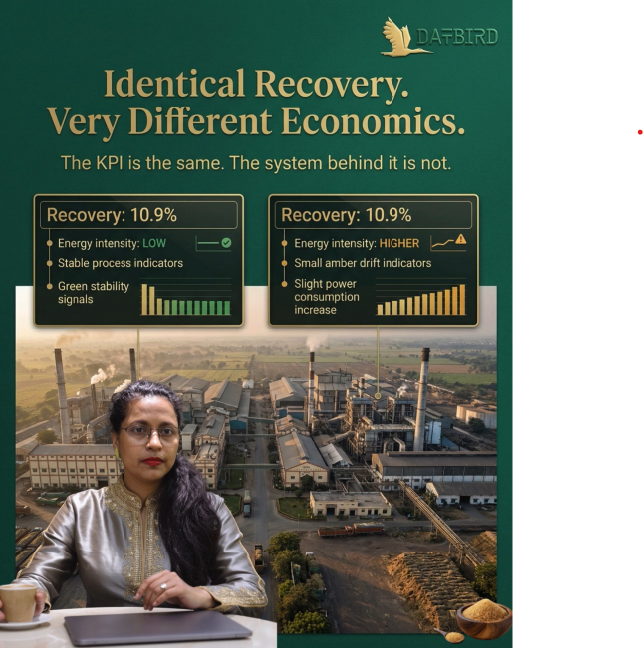
Two sugar mills can report the same recovery % — and still have completely different profitability.
One quietly expands margin.The other struggles to hold it.
Recovery percentage is one of the most watched metrics in the industry.
Board discussions, operational reviews, and end-of-season summaries often revolve around it.
But recovery alone does not determine structural profitability.
Two plants can post identical recovery numbers while their economic outcomes diverge significantly.
Recovery measures how much sugar is extracted from cane.
It does not measure how efficiently the entire system produces that outcome.
Underneath the same recovery %, mills can operate with very different structural conditions:
• Energy intensity per tonne crushed
• Steam balance across evaporation and boiling
• Process stability during peak crush
• Fibre variability handling• Downtime recovery patterns
• Recycle load across stations
In other words:Recovery reflects output.
Structural efficiency determines margin.A plant may achieve the same recovery while expending far more internal energy, steam, and mechanical stress to get there.
Those hidden structural costs rarely appear in headline KPIs.
Consider a mill crushing 10–12 lakh tonnes per season.
Two plants both report 10.9% recovery.
But if one operates with:• 2–3 kWh higher power intensity per tonne,
• slightly higher steam consumption,
• and additional recycle load in boiling stationsthe seasonal financial difference can easily reach:₹3–₹7 crore in margin variance.
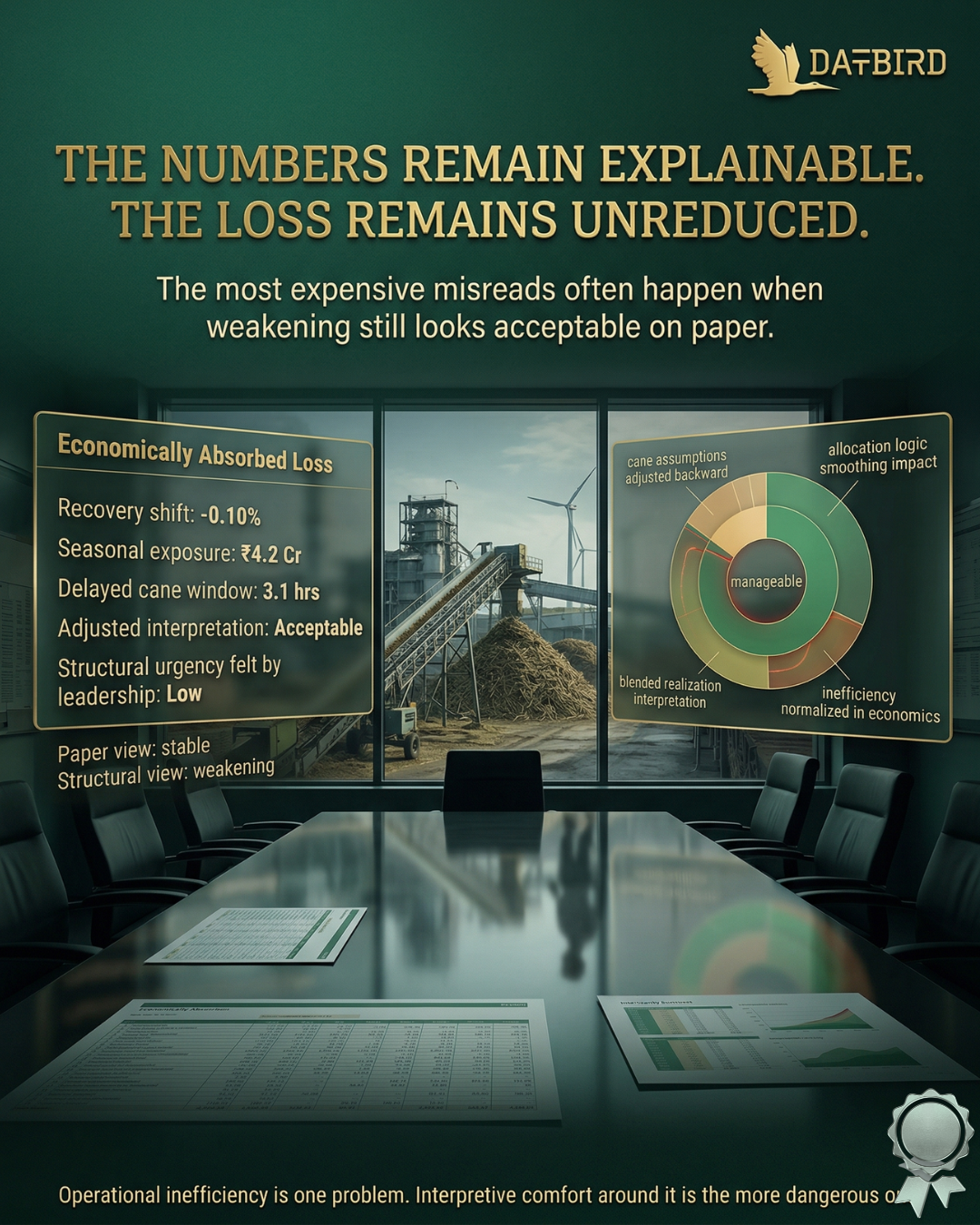
Yet on paper, the mills appear “equally efficient.”This is why many profitability discussions stall.Leadership assumes the system is performing optimally because the headline KPI looks strong.
But recovery is a surface indicator.
The real question is:How much structural effort did the system expend to achieve that recovery?
Without structural diagnostics, mills may optimize operations —while the underlying economic efficiency remains unclear.In most plants, these differences become visible long before they show up in financial statements.
But only if someone is examining the system structurally rather than operationally.If this is something you want clarity on before the next crushing season begins,I’m always open to exchanging perspectives with industry leaders.