Some losses do not disappear.
They just become easier to explain.
Not every inefficiency shows up as a visible operational failure.Some get absorbed into the way performance is calculated, averaged, adjusted, or commercially interpreted.
That is what makes them dangerous.
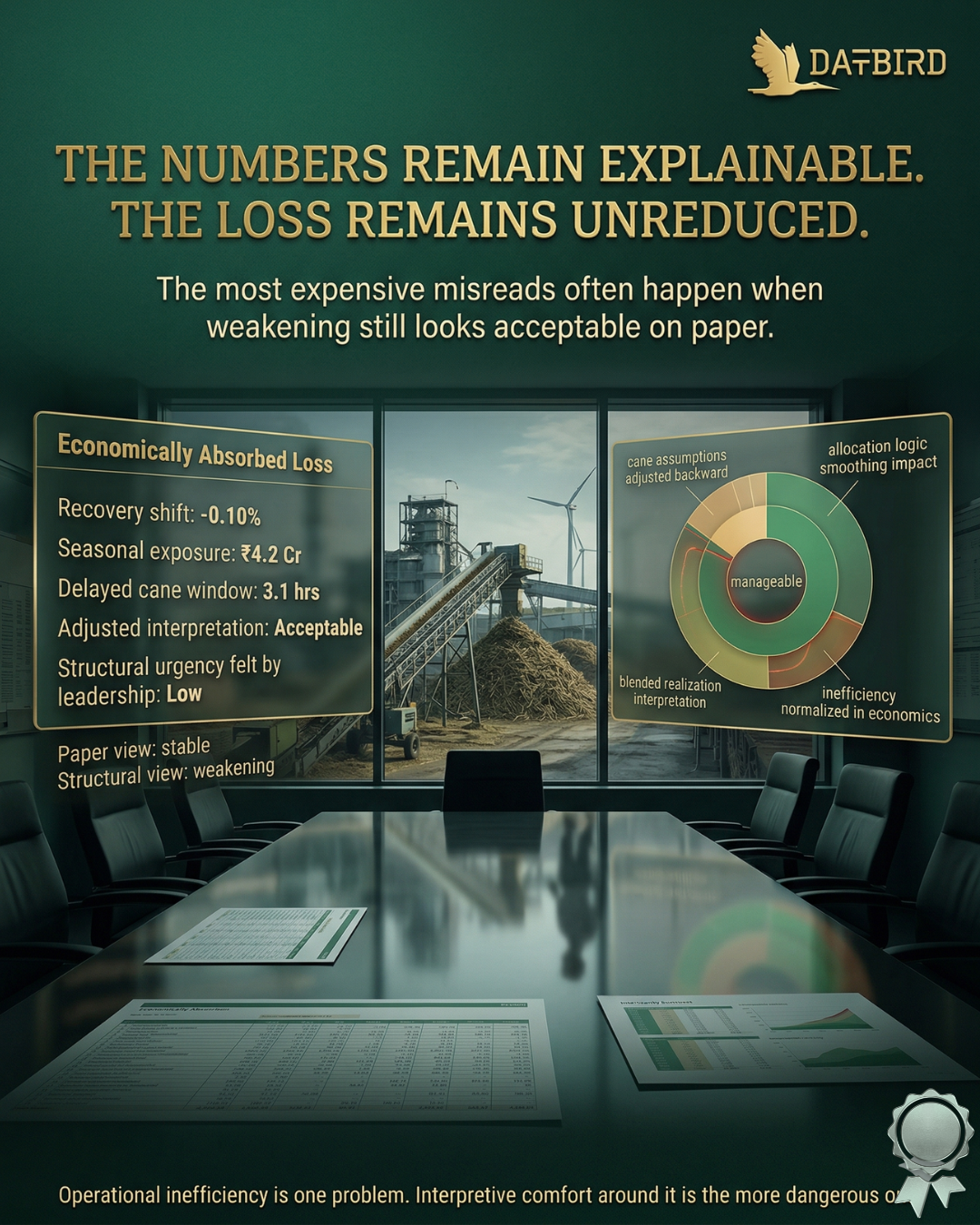
A mill may still look manageable on paper because:cane assumptions are adjusted backwardallocation logic smooths out the impactrealization is interpreted across blended conditionsoperating inefficiencies get normalized inside the economicsSo the loss does not disappear.
It disappears interpretively.And that changes everything.
Because once inefficiency is economically absorbed,leadership no longer feels the full urgency of the structural problem.
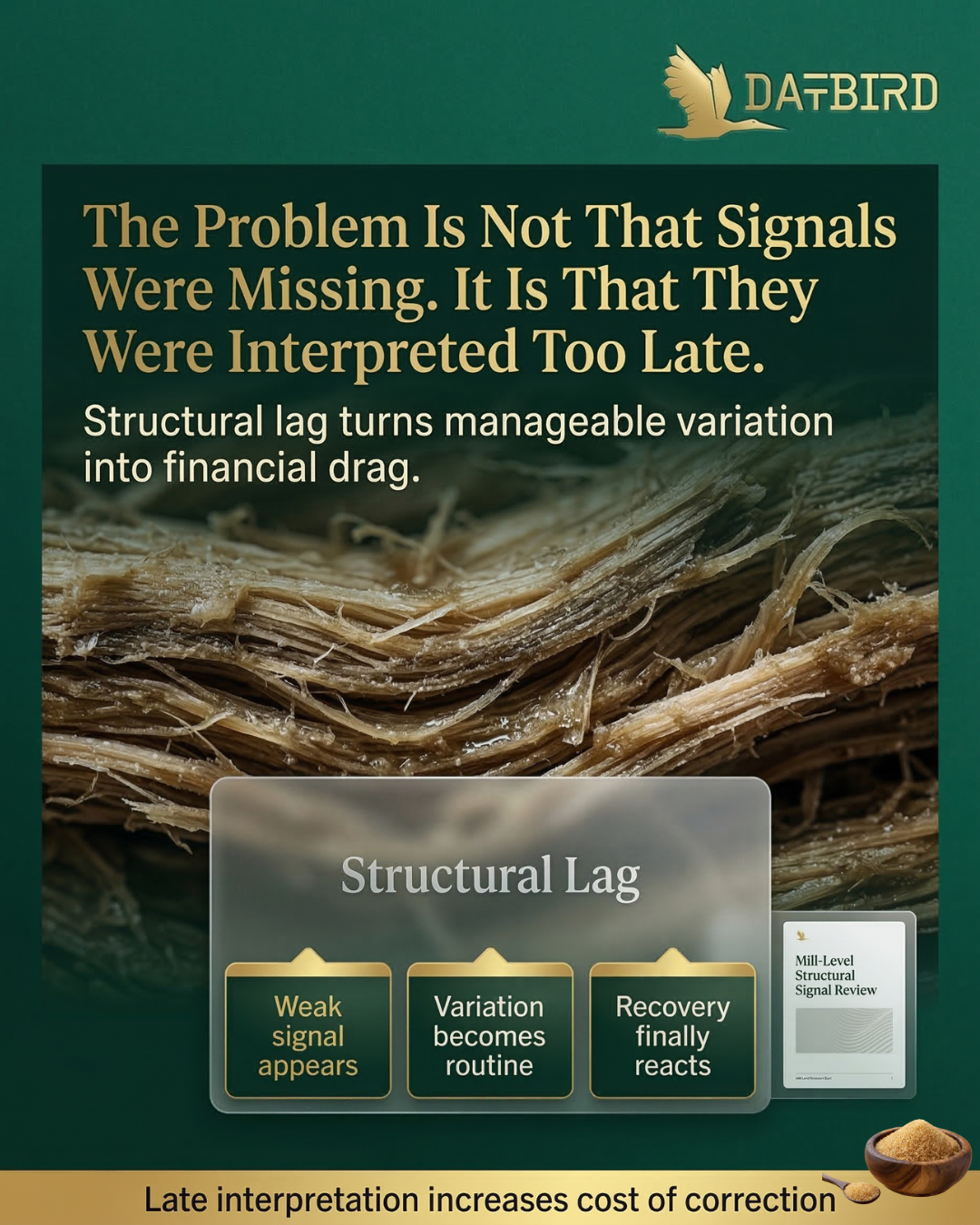
The plant keeps running.The reports keep moving.The numbers remain explainable.But underneath, value is still leaking.
In integrated sugar–ethanol operations, some of the most expensive misreads happen not when the plant fails,but when the economics still make the weakening look acceptable.
A small recovery shift, a delayed cane window, or purity loss that looks “manageable” inside adjusted calculations can still quietly translate into multi-crore seasonal impact.
That is why the real question is not only:What is the loss?
It is also:Where is the system economically masking the loss before leadership reads it for what it is?
Operational inefficiency is one problem.Interpretive comfort around that inefficiency is the more dangerous one.Which loss in your system is being explained well… but not actually reduced?