March 31, 2026
Most mills do not suffer from a lack of signals
Most mills do not suffer from a lack of signals. They suffer from signals being interpreted too late.

Most mills do not suffer from a lack of signals.
They suffer from signals being interpreted too late.
That is a very different problem.In many plants, the discussion starts only when recovery visibly weakens, throughput begins to slip, steam burden rises beyond comfort, or margin pressure becomes difficult to ignore.But by that point, the business is no longer interpreting the beginning of structural drift.
It is reacting to the delayed economic expression of drift that has already been building inside the system.
That distinction matters.
Because structural deterioration rarely starts as a dramatic event.
It starts as weak signals that appear too routine, too small, or too disconnected to trigger escalation:-a slight decline in cane condition-a small inconsistency in preparation-minor extraction instability inside acceptable averages-process variation that gets normalized-rising operating burden absorbed as routine-delayed intervention because the headline KPI still looks acceptable
None of these look commercially urgent on day one.
That is exactly why they survive long enough to become expensive.
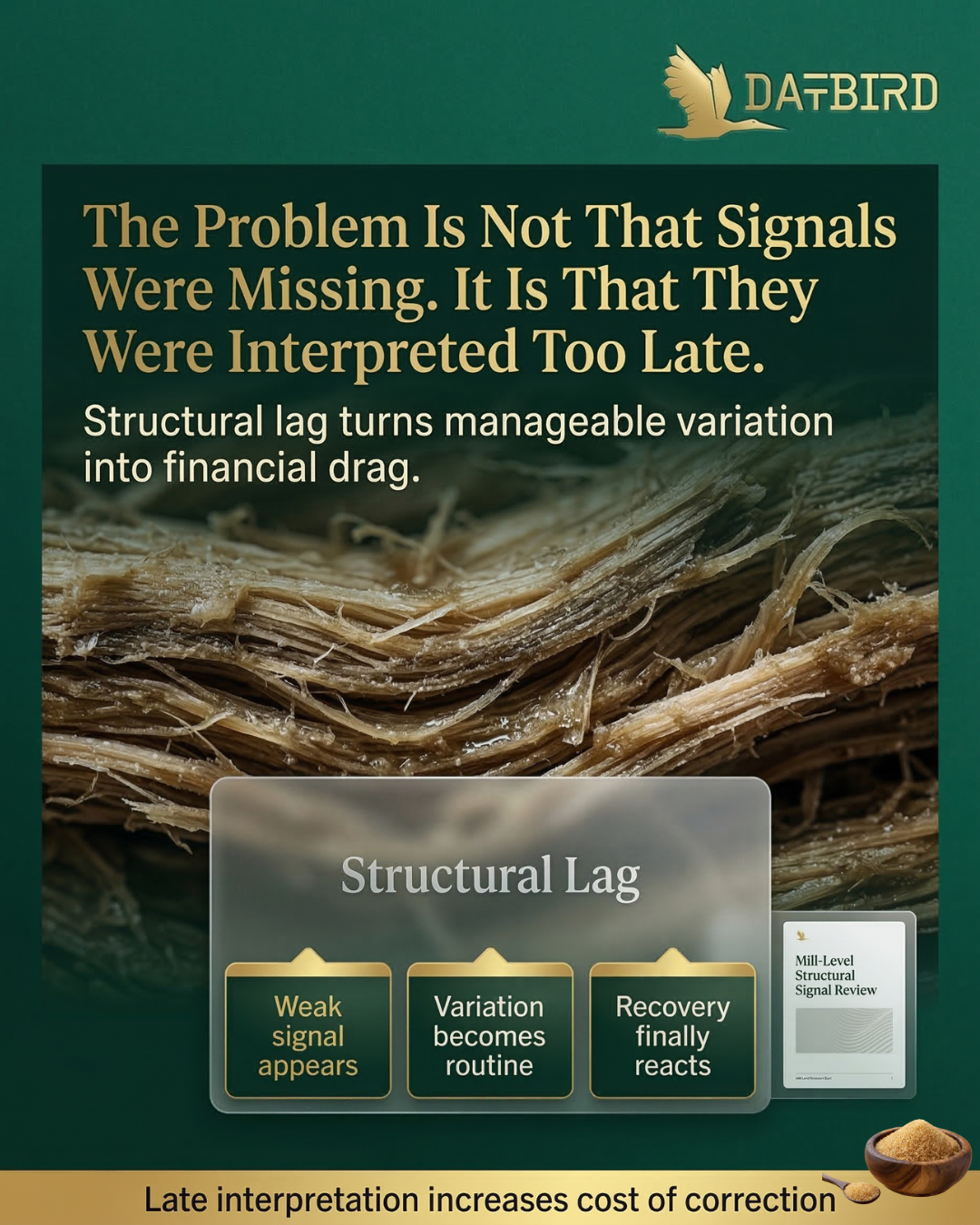
This is where structural lag enters.A weak signal appears.
Variation becomes routine.Recovery reacts later.By the time the final KPI moves, leadership is not detecting the source of the problem.It is detecting the moment the system can no longer hide it.
That is why two mills can run with apparently similar reported stability for a period of time, and then separate suddenly in recovery, margin quality, or operating flexibility.
The divergence did not begin at the point of decline.
It began at the point where earlier signals stopped being interpreted as economically connected.
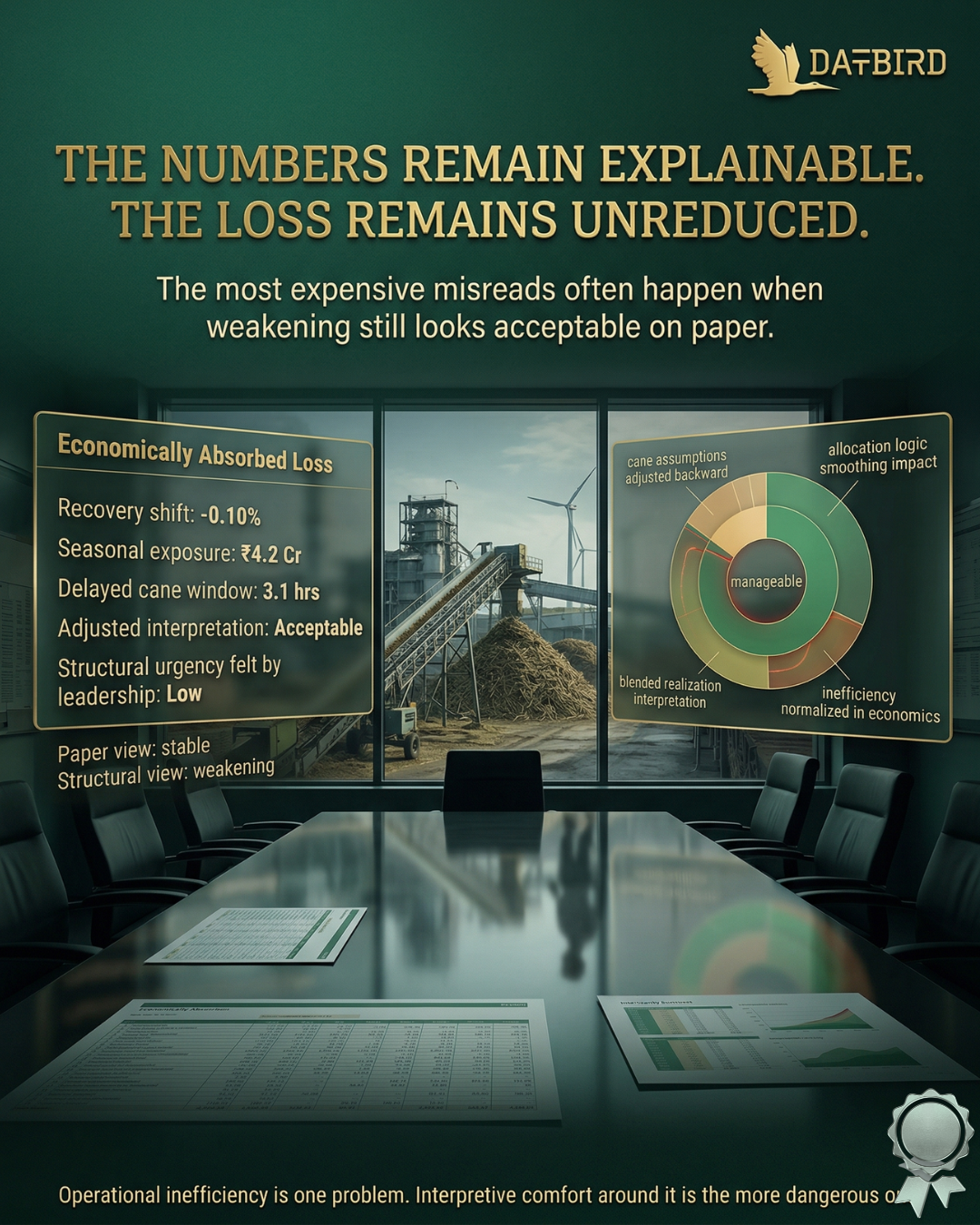
A 0.1% recovery movement may look small in isolation.But that movement is often the accumulated result of earlier tolerated deviations that have already travelled through the plant and into the economics of the season.
This is why the real issue is not only monitoring.It is interpretation.
A plant may have dashboards.
A plant may have alerts.A plant may even have daily review routines.
But if all of those systems wait for the most visible KPI to move before leadership calls it structural, then the business is still reading the plant too late.So the more useful question is not:
Did the plant have signals?It is: Which signals were present earlier — and why were they not interpreted as economically important soon enough?
That is where structural diagnosis becomes commercially valuable.
Because once interpretation is late, correction is always more expensive.
If this is something you want clarity on before your next crushing season decision, let’s talk.In your experience, which weak signal gets normalized most easily until it becomes costly: cane condition, extraction loss, process variation, or response delay?
Our latest news and trending topics