March 5, 2026
The Structural Stability Score
The Structural Stability Score

The Structural Stability Score
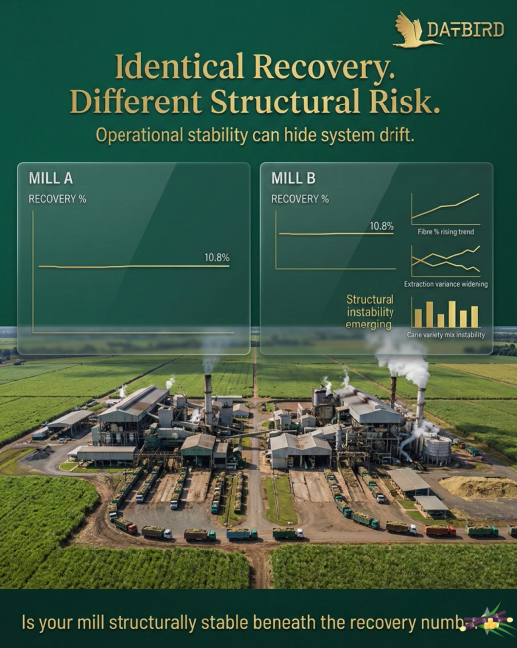
Two sugar mills can report identical recovery numbers at the end of a crushing week.
On paper, the systems appear equally healthy.
But structurally, one of those mills may already be drifting toward instability.Recovery is typically treated as a performance metric.
But in seasonal processing systems, recovery is actually an outcome variable — the final expression of several underlying structural forces:
• cane composition variability
• fibre ratio shifts• variety mix dilution• extraction efficiency thresholds
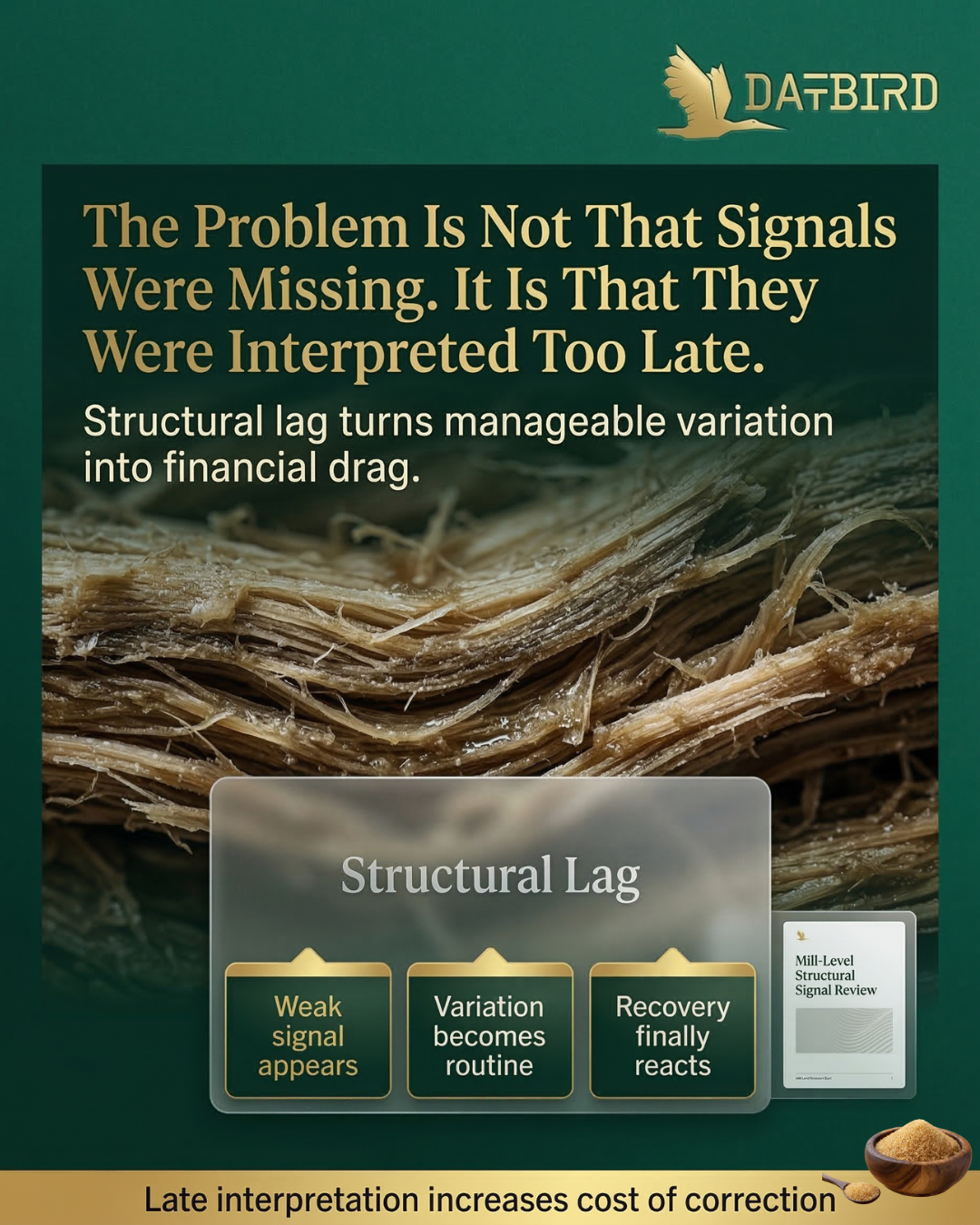
• timing of peak sucrose windowsWhen these variables begin drifting, the headline recovery number may remain stable for weeks.
The dashboard signals “normal.”The system, however, has begun losing structural balance.
Consider a mill crushing 12–14 lakh tonnes in a season.
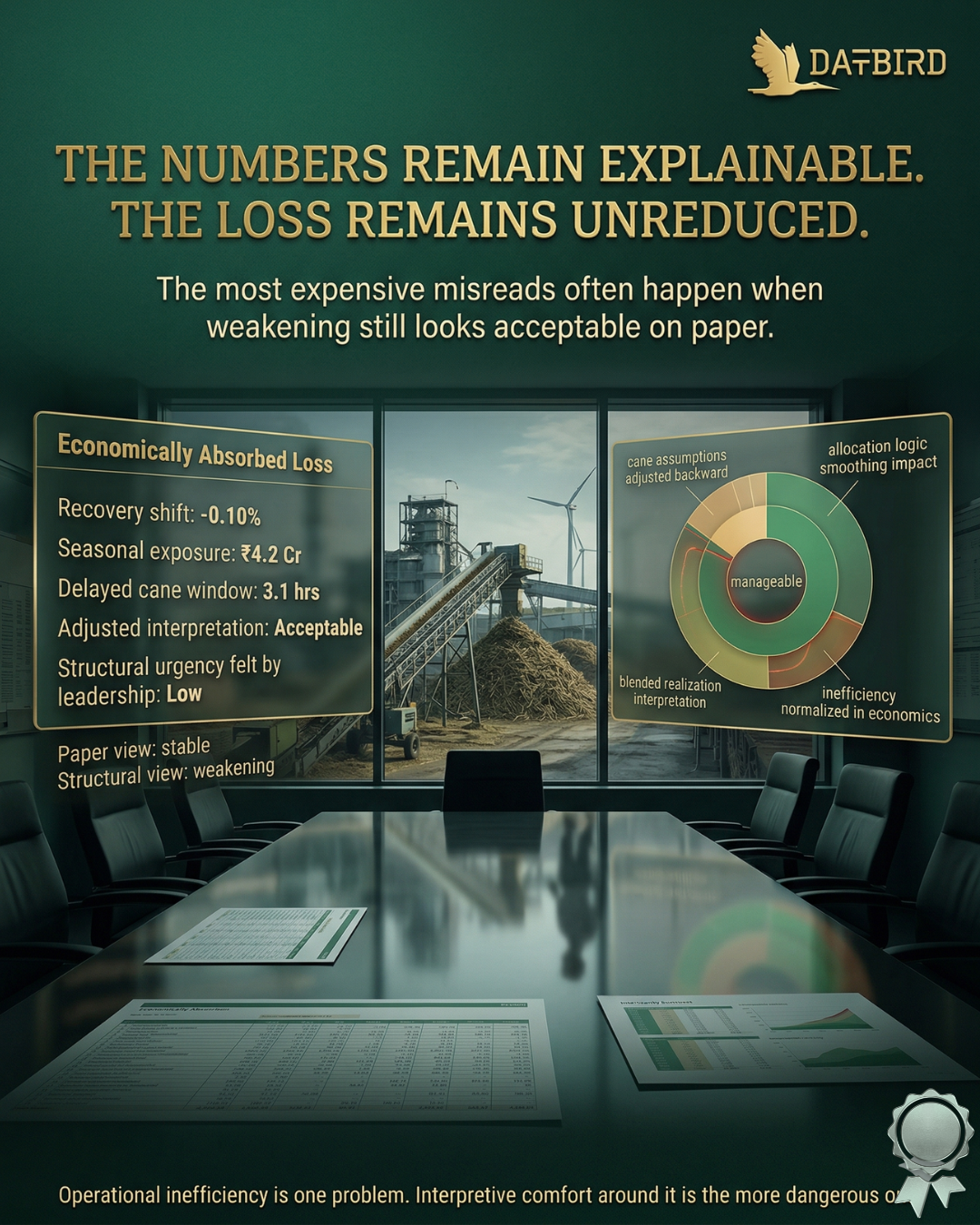
A structural drift of just 0.1–0.15% in recovery stability can translate to:• 1,200–1,800 tonnes of unrealized sugar output• roughly ₹3–6 crore of seasonal value erosionNothing dramatic appears on the operational dashboard.
But the margin gap compounds quietly across the season.The real question is not:“Is our recovery stable today?”
It is:“Is the system structurally stable underneath that recovery number?”
Because two mills can report identical recovery.Yet one may be operating within healthy process tolerances, while the other is slowly accumulating structural risk.
Before optimization begins, leaders need clarity on system stability dynamics.
Before the next crushing season review, a useful question to ask might be:
What is the structural stability score of our mill?If you want that clarity before the next seasonal cycle, that is a conversation worth having.
Our latest news and trending topics