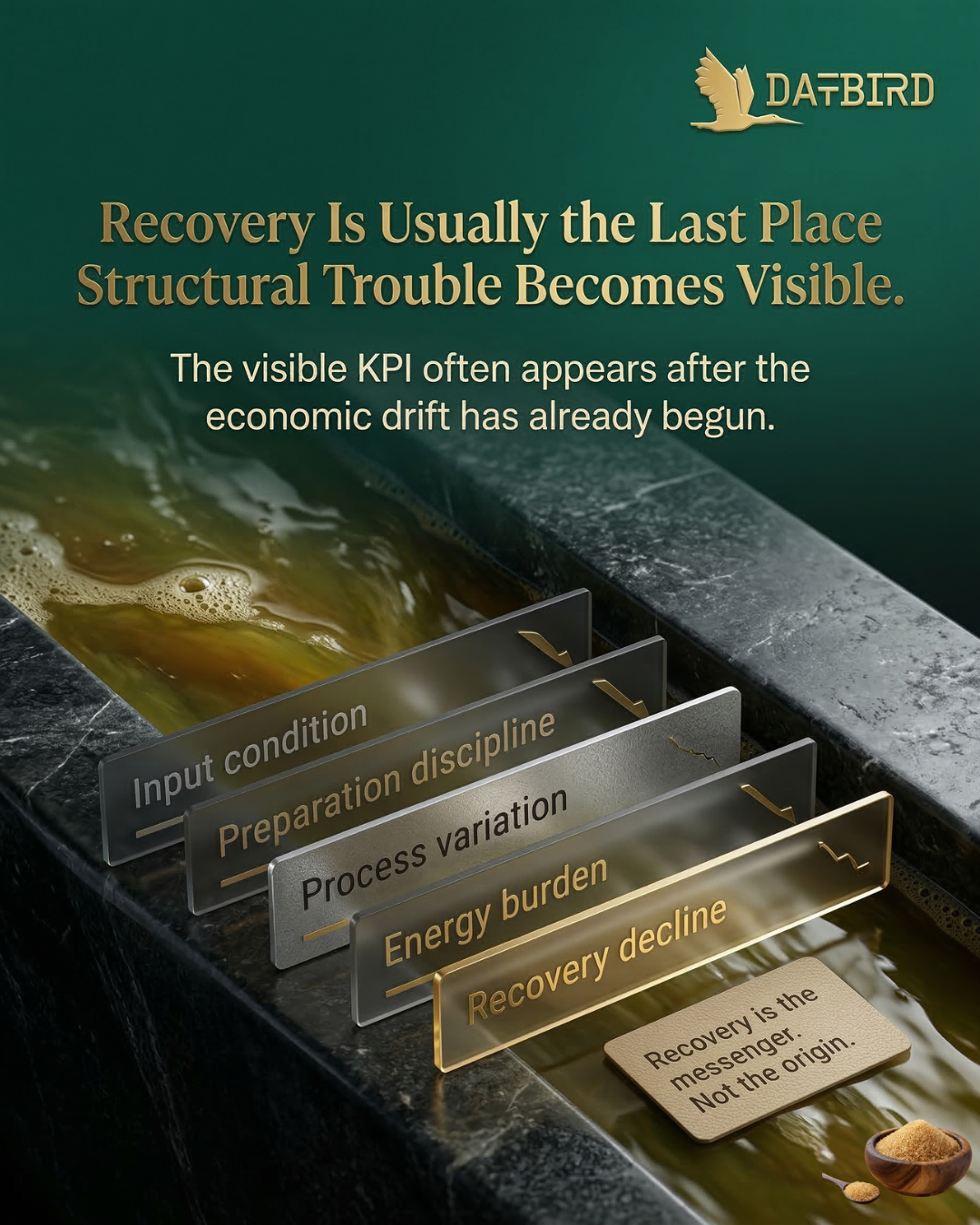
Recovery is usually the last place structural trouble becomes visible.
That is why many mills feel surprised by performance deterioration that was already building inside the system.
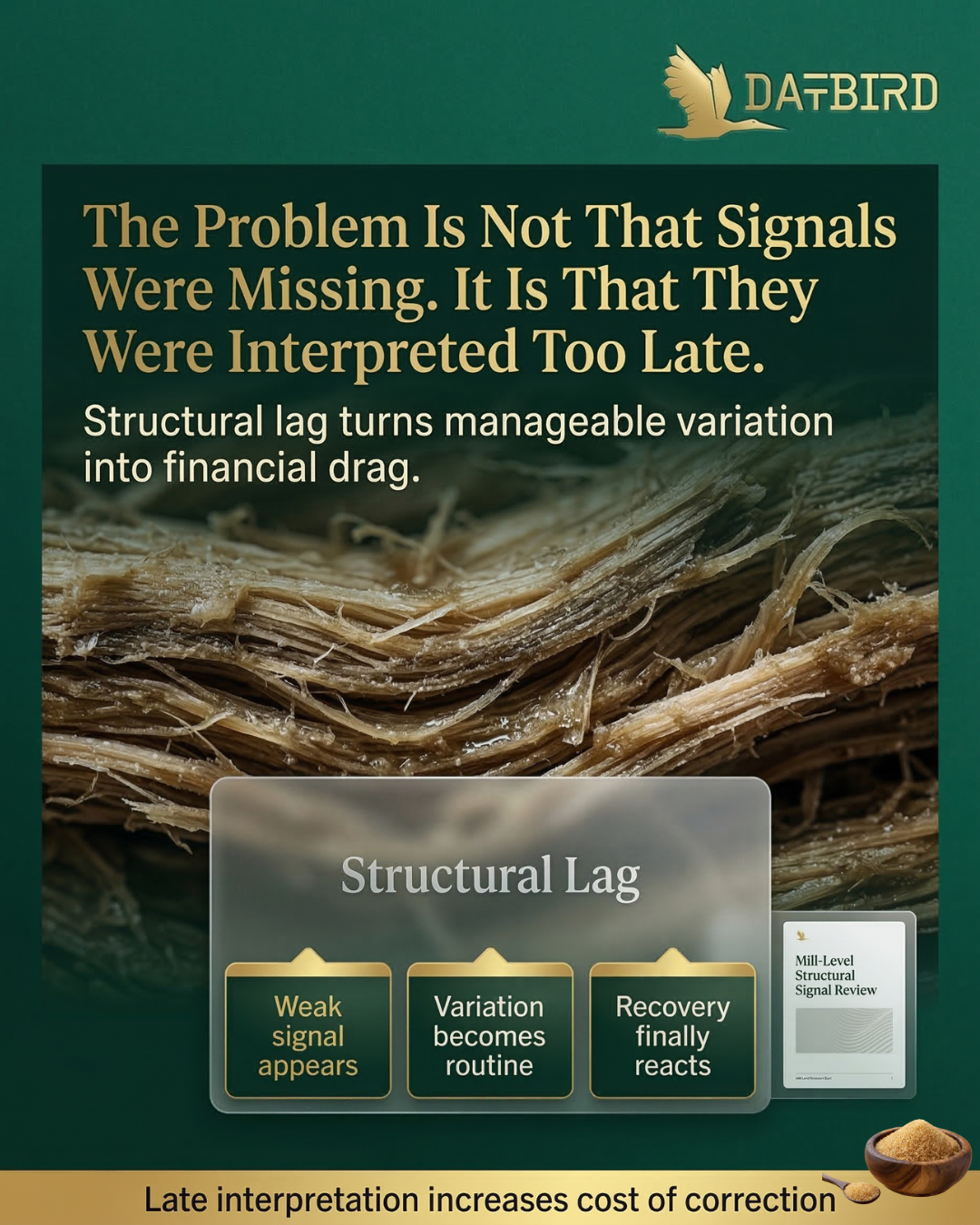
The problem is not that signals were absent.
The problem is that the system was not reading them as economically connected.In most mills, monitoring is designed around visible operating outcomes: recovery, throughput, steam consumption, downtime, quality bands, contribution trends.But structural instability rarely begins at the outcome layer.It begins earlier — in weak signals that appear too minor, too routine, or too disconnected to trigger strategic attention.
A slight deterioration in cane condition.A small inconsistency in preparation.
Minor extraction slippage.Recurring process-side variation.Steam burden that slowly normalizes upward.
Delayed response to deviations that look operational rather than financial.None of these signals look dramatic at first.
That is exactly why they survive.
They remain inside the plant as “manageable variation” until the cumulative effect finally reaches a visible KPI — and recovery becomes the messenger.
By then, the plant is not detecting the beginning of the problem.
It is detecting its delayed expression.That delay is where structural lag sits.
And structural lag is expensive.Because once recovery falls visibly, the economics have often already been absorbing the drift for part of the season.
Yield quality has weakened. Energy burden has risen. Response time has lengthened.
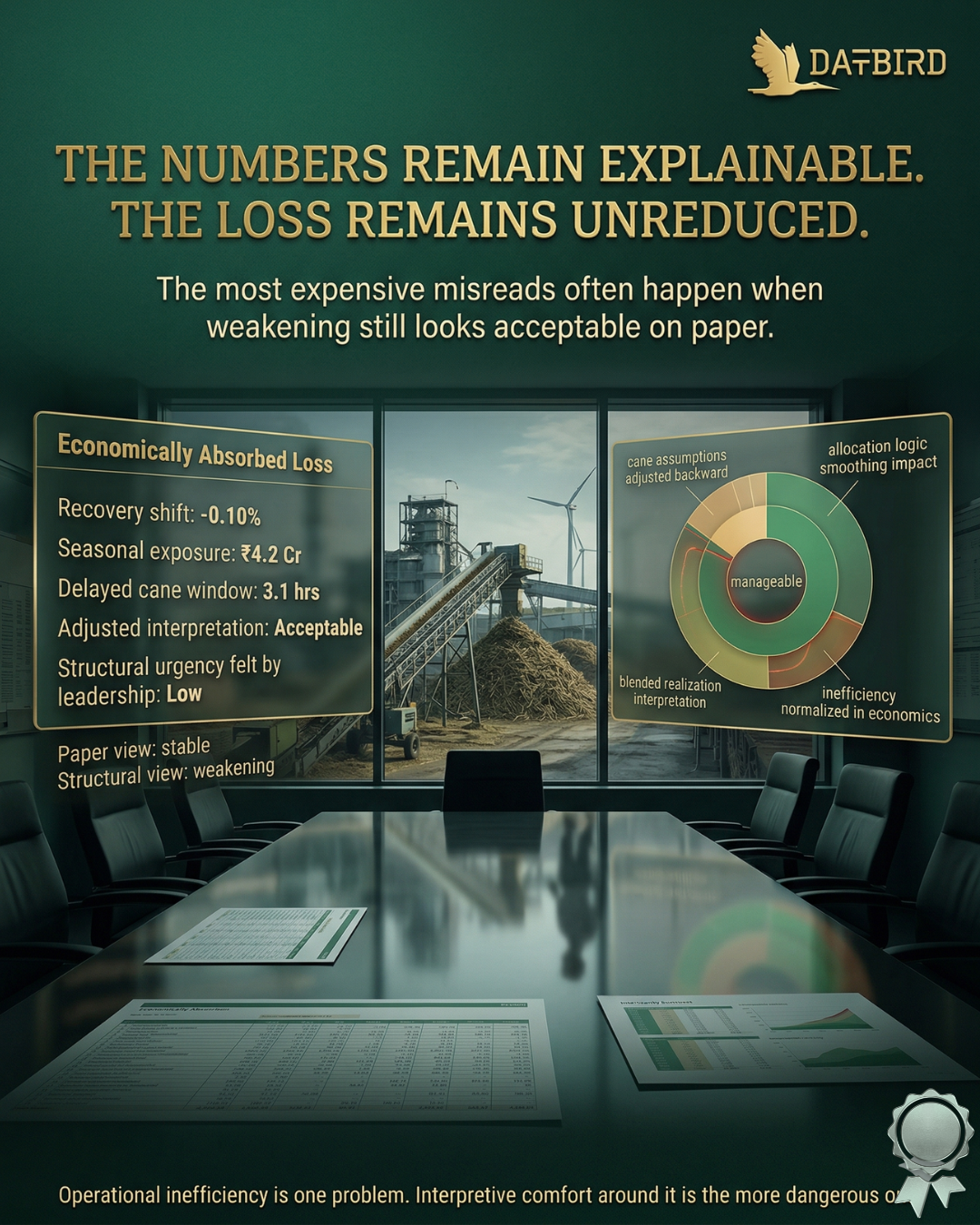
Margin quality has already started to compress.A 0.1%–0.2% recovery movement may appear small in reporting terms.But across seasonal throughput, that movement is rarely an isolated metric event.
It is often the final visible output of multiple earlier distortions that have already compounded through the plant.This is why two mills can show similar reported stability for a period of time, and then suddenly diverge.
The divergence did not begin when the KPI changed.It began when the underlying operating signals stopped being interpreted structurally.
That is why this is not just a monitoring issue.It is an interpretation issue.A plant may have data.A plant may even have alerts.
But if leadership is waiting for the most visible KPI to move before calling it a problem, then the business is still detecting structural trouble too late.
The sharper question is not:When did recovery start falling?It is: Which upstream signals were already telling us the system was weakening before recovery moved at all?
That is where structural diagnosis matters — before operational lag becomes financial drag.
If this is something you want clarity on before your next crushing season decision, let’s talk.In your experience, which upstream signal gets ignored most often until recovery finally reflects it: cane condition, preparation discipline, process variation, or steam burden?