March 28, 2026
Peak crush can be the first warning sign of instability — not just a sign of operating strength.
Peak crush can be the first warning sign of instability — not just a sign of operating strength.


Peak crush can be the first warning sign of instability — not just a sign of operating strength.
That may sound counterintuitive.But in many mills, the point at which leadership feels most reassured by throughput is also the point at which hidden strain starts entering the system.
Peak crush looks impressive on paper.Higher daily crush rates create confidence.
They suggest strong cane flow, plant readiness, operating rhythm, and momentum in the season.But peak crush is not just a volume event.
It is also a stress event.
Because when the system is pushed toward maximum throughput, small hidden weaknesses begin to express themselves more clearly:-cane freshness starts becoming more sensitive-preparation discipline comes under tighter pressure-extraction consistency becomes harder to hold-process-side variation increases under load-steam burden rises-delayed response becomes more expensive
At lower operating intensity, some of these issues remain manageable.At peak crush, they no longer remain isolated.They begin to interact.
This is where leadership teams can get misled.A mill may celebrate the peak number while underneath that achievement, structural stress is already beginning to build.
The visible operating success can coexist with early signs of instability — and if those signs are not interpreted correctly, the cost appears later in recovery, energy burden, process control, and margin quality.
That is why peak crush should not only be tracked as a throughput milestone.It should be read as a structural pressure test.
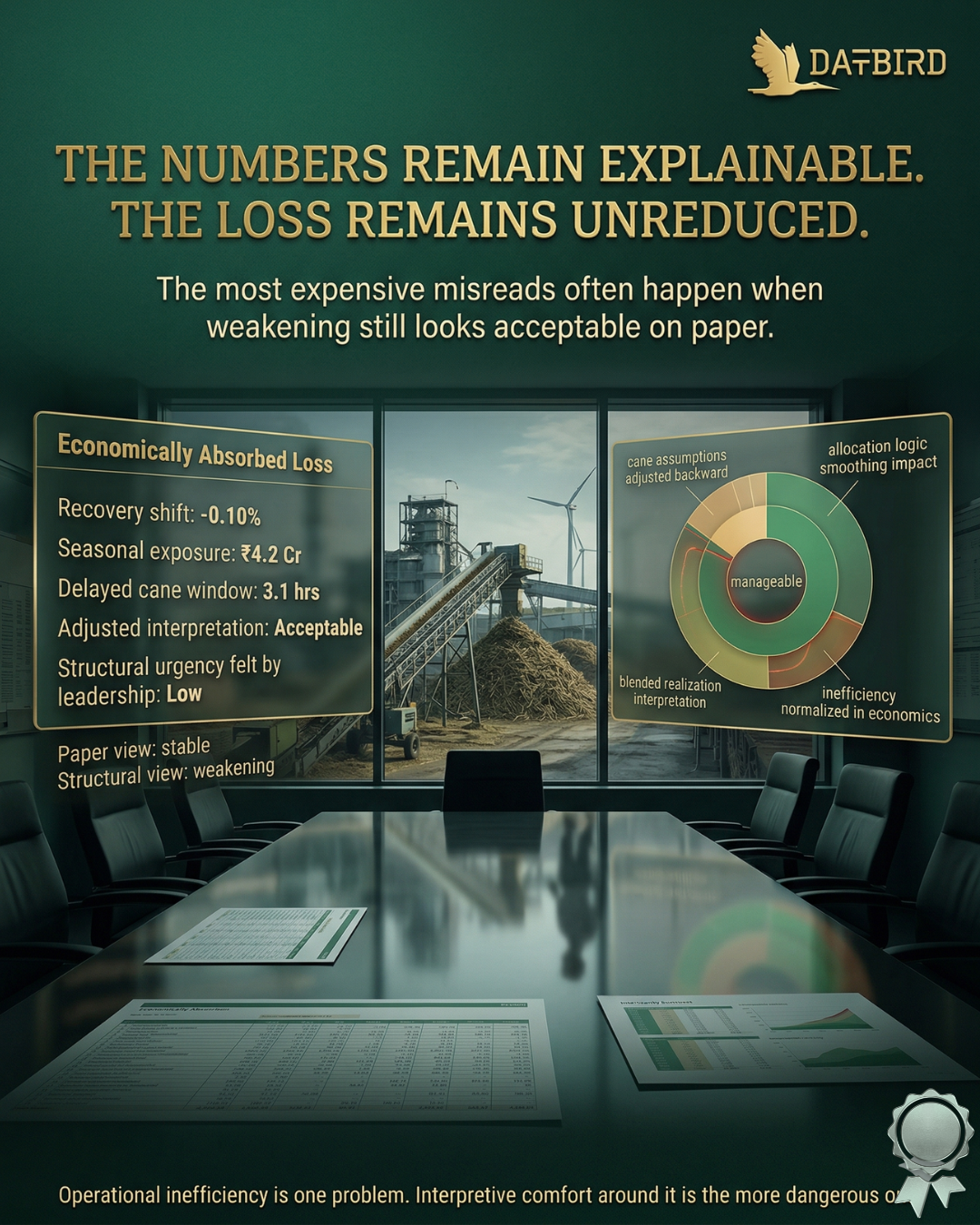
A 0.1% deterioration in recovery under high crush conditions, a small drop in extraction quality, or a modest rise in steam intensity may look operationally minor.
But across peak-volume days and seasonal throughput, those small deviations can widen into material economic loss.
This is where diagnosis matters.
Because the real question is not only:
Did the mill achieve peak crush?It is:
What did the system begin to absorb in order to achieve it?
That is a clarity problem before it becomes an execution problem.
If this is something you want clarity on before your next crushing season decision, let’s talk.In your experience, what shows the earliest stress during peak crush: cane freshness, extraction discipline, process stability, or steam load?
Our latest news and trending topics