March 29, 2026
Most mills do not detect structural problems when they begin.
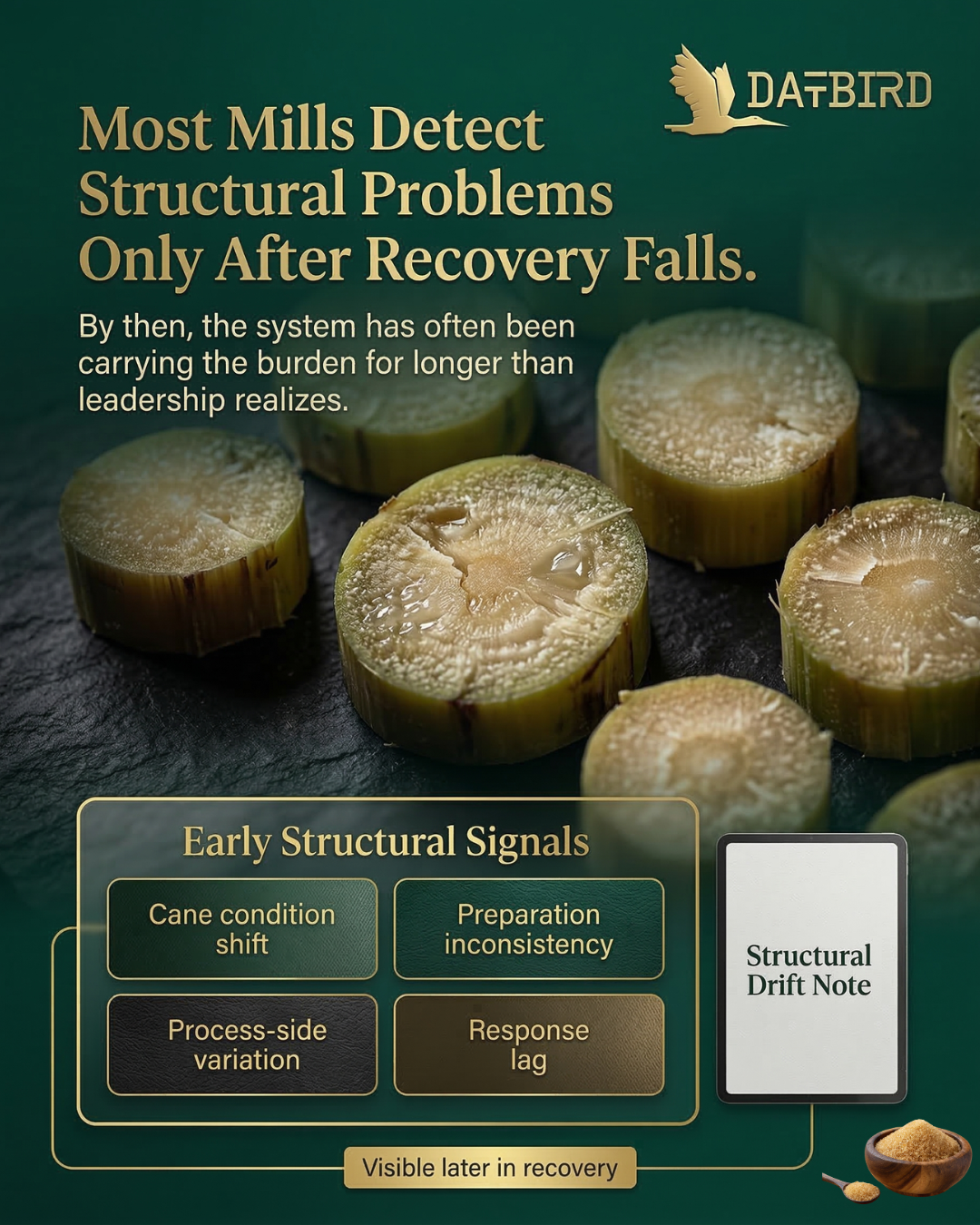
Most mills do not detect structural problems when they begin. They detect them when recovery finally drops.

Most mills do not detect structural problems when they begin.
They detect them when recovery finally drops.By then, the real damage is usually already underway.
That is one of the biggest blind spots in plant-level performance management.Many monitoring systems are built to detect visible performance deterioration — lower recovery, weaker throughput, rising steam consumption, quality deviation, or margin pressure.But structural problems rarely begin at the moment those numbers move.
They usually begin earlier.Much earlier.
They begin as small shifts inside the operating system that do not immediately trigger alarm:weaker cane condition or freshnesssmall losses in preparation disciplineextraction instability hidden inside average performancerising steam burden normalized as operational routinedelayed response to minor process variationweaker by-product economics absorbed without strategic attentionIndividually, these changes often look too small to be escalated.
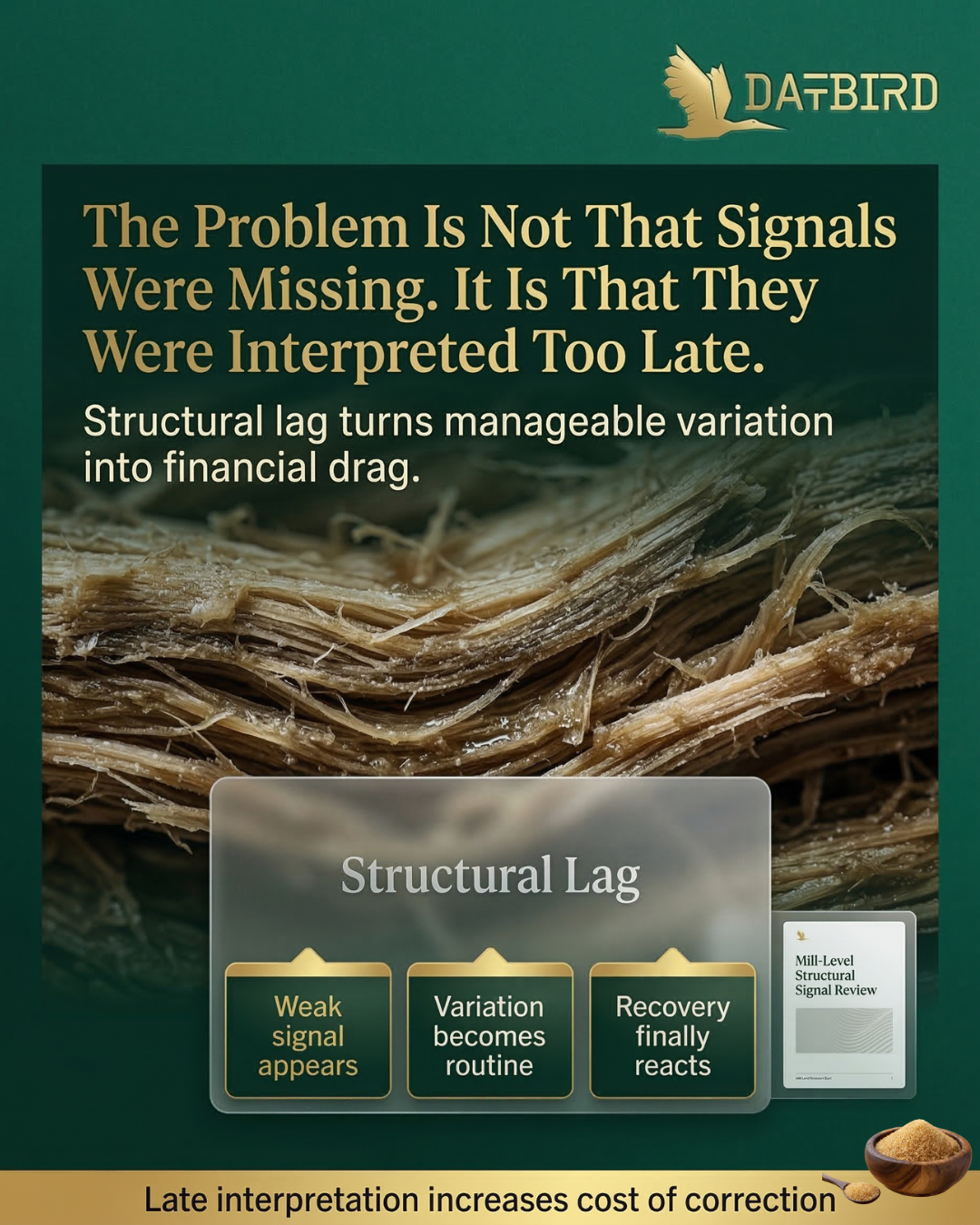
Collectively, they create structural lag.
That lag is what matters.
Because by the time recovery visibly falls, the system has often already been carrying the burden for days, weeks, or even across a meaningful part of the season.
The dashboard shows the symptom late.
The economics started weakening earlier.
That is why two mills can appear similar for a period of time — until one suddenly shows recovery pressure, margin compression, or shorter effective crushing performance.
In reality, the divergence did not begin at the point of visible decline.
It began upstream, in the layers the monitoring system was not interpreting structurally.
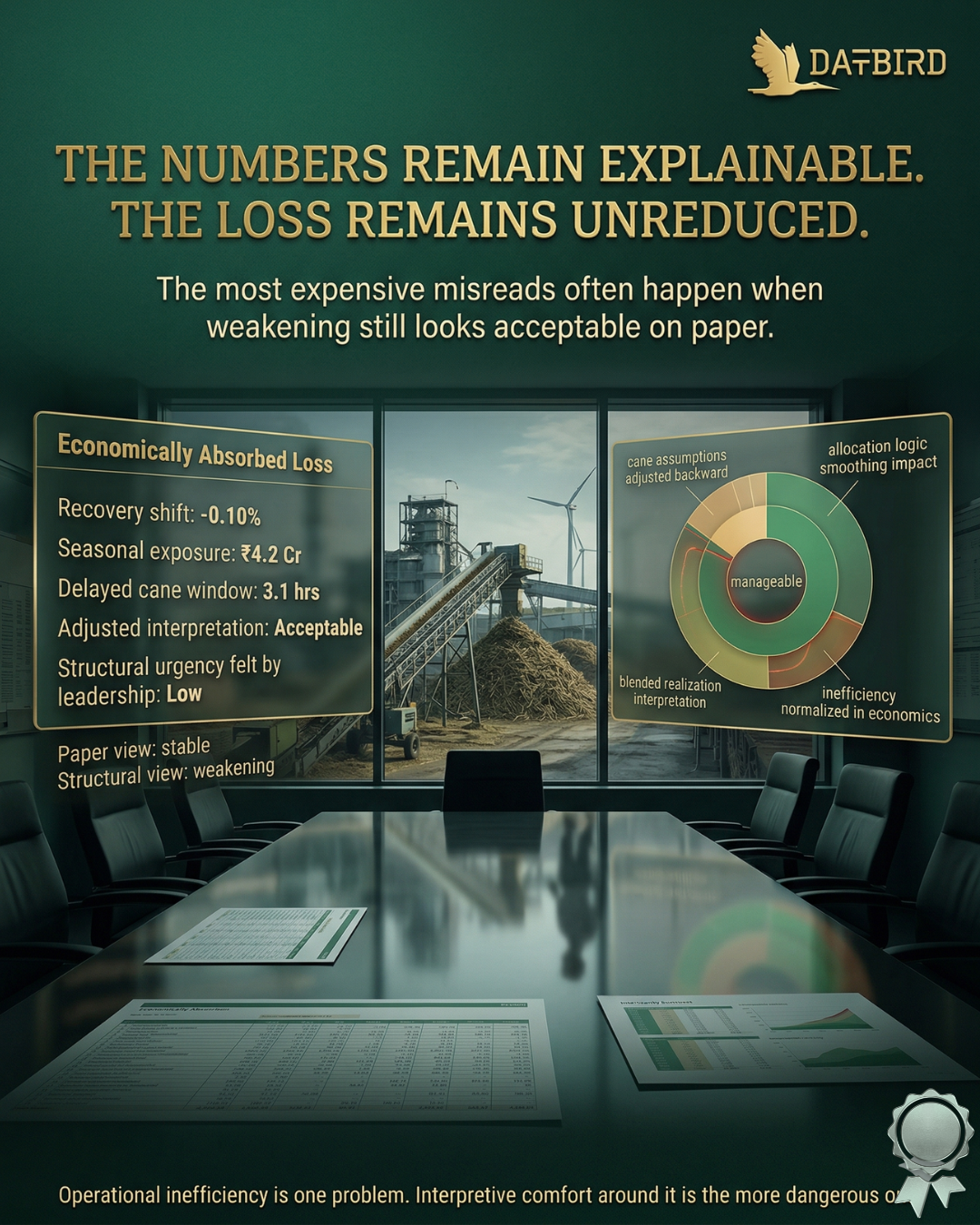
A 0.1% loss in recovery does not arrive in isolation.It may be the final visible expression of multiple small tolerated deviations that have already compounded:-lower cane quality absorption-hidden extraction loss-process variability-energy inefficiency-delayed operating correction
Each may appear operationally minor.Across seasonal throughput, they can translate into material economic loss.
That is why this is not first a monitoring problem.It is a diagnostic framing problem.If a mill is only set up to react after the headline KPI falls, it is not truly detecting structural drift.
It is detecting the financial consequence of structural drift.
That distinction is commercially important.Because once the loss becomes visible in recovery or contribution, part of the season’s economic damage has already been absorbed.
Correction at that stage is always more expensive than earlier structural interpretation.
So the more useful question is not:When did recovery fall?
It is:What was already shifting in the system before recovery fell?
That is where structural diagnosis becomes valuable — before visible decline turns into seasonal financial drag.
If you want clarity on before your next crushing season decision, let’s talk.
Our latest news and trending topics