March 14, 2026
Is our energy intensity structurally aligned with the throughput of our plant?
Is our energy intensity structurally aligned with the throughput of our plant?

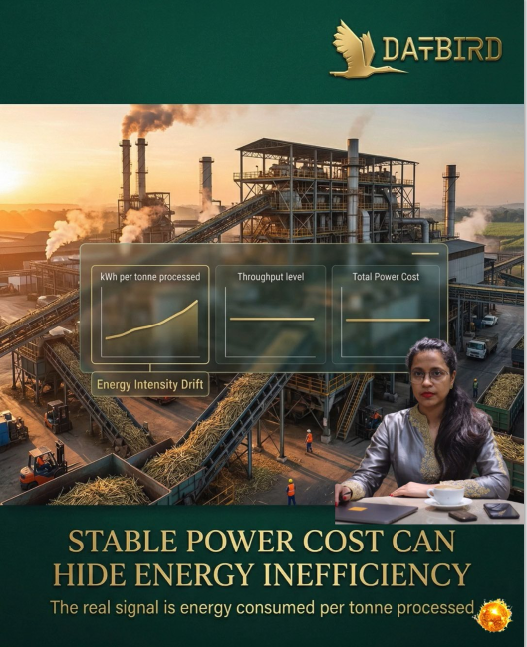
Many leadership teams review their monthly power bill and conclude:
“Energy costs are under control.”If total spend has not increased materially, the system appears stable.
But in seasonal processing industries, stable power cost does not necessarily mean an efficient energy system.
Total power spend is a lagging number.What actually determines structural profitability is energy intensity — how much energy the plant consumes per tonne of material processed.
In sugar and dairy plants, intensity drift can begin quietly when:
• fibre % in cane gradually increases
• throughput fluctuates across the crushing window• turbines and auxiliaries operate outside optimal load ranges
• steam balance shifts between milling, evaporation, and cogenerationNone of these changes necessarily trigger a visible spike in total power cost.
Yet the system begins consuming more energy per unit of output.
That drift often remains invisible until margin compression becomes noticeable.
Consider a mill crushing 12–14 lakh tonnes of cane in a season.
If energy intensity rises by just 4–5% due to fibre drift, load imbalance, or auxiliary inefficiency, the seasonal impact can reach:
• ₹2–4 crore in additional power and steam costs
• reduced cogeneration export potential
• weaker overall operating marginsOperational dashboards still show:
• similar power bills• similar production levelsBut structurally, the plant is extracting less economic value from each tonne processed.
This is rarely just an operational problem.It is often a measurement gap.When energy performance is evaluated primarily through total spend, leadership loses visibility into:• kWh per tonne trends• steam-to-power balance shifts• energy intensity thresholds• seasonal load efficiencyBy the time the cost spike appears,
the structural drift has already been present for weeks.Energy performance is a system metric, not an accounting metric.
Stable power cost can coexist with declining energy efficiency.
And in seasonal plants, those hidden shifts can compound quickly.The sharper question is not:“Is our power bill stable?”
It is:“Is our energy intensity structurally aligned with the throughput of our plant?”If you want clarity on that before the next crushing or processing cycle, that is a conversation worth having.
Our latest news and trending topics