March 20, 2026
End-season recovery decline is rarely the problem.
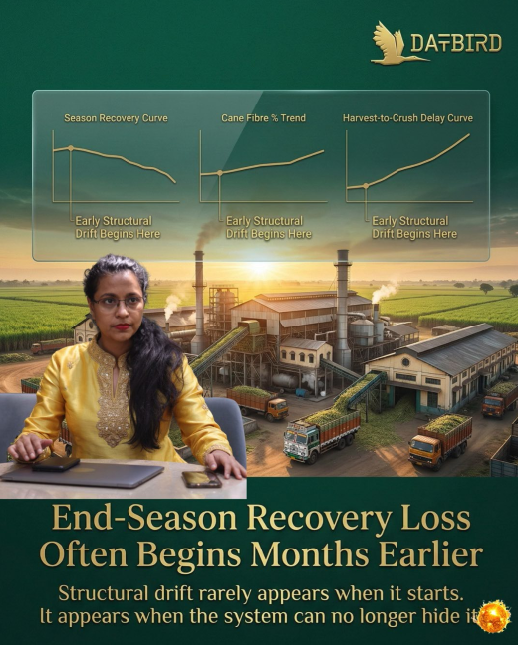
End-season recovery decline is rarely the problem. It is the lagging indicator of earlier structural drift.

Most mills assume recovery decline at the end of the crushing season is inevitable.
Late cane. Higher fibre. Seasonal fatigue.
But in many plants, the decline visible in the final weeks did not originate there.
It was structurally embedded in the system months earlier.
End-season recovery decline is rarely the problem
.It is the lagging indicator of earlier structural drift.
Small shifts early in the cycle gradually shape the recovery trajectory of the entire season:
• cane variety mix drifting toward higher fibre• harvest-to-crush freshness gaps widening•
throughput instability during peak sucrose days
• steam and milling balance operating outside optimal bands
None of these signals appear dramatic in isolation.
But together they redefine the recovery potential of the plant long before the season ends.
By the time recovery visibly drops in the final phase, the system is no longer correcting a new problem.It is revealing an earlier design misalignment.
Consider a mill crushing 12–15 lakh tonnes of cane in a season.
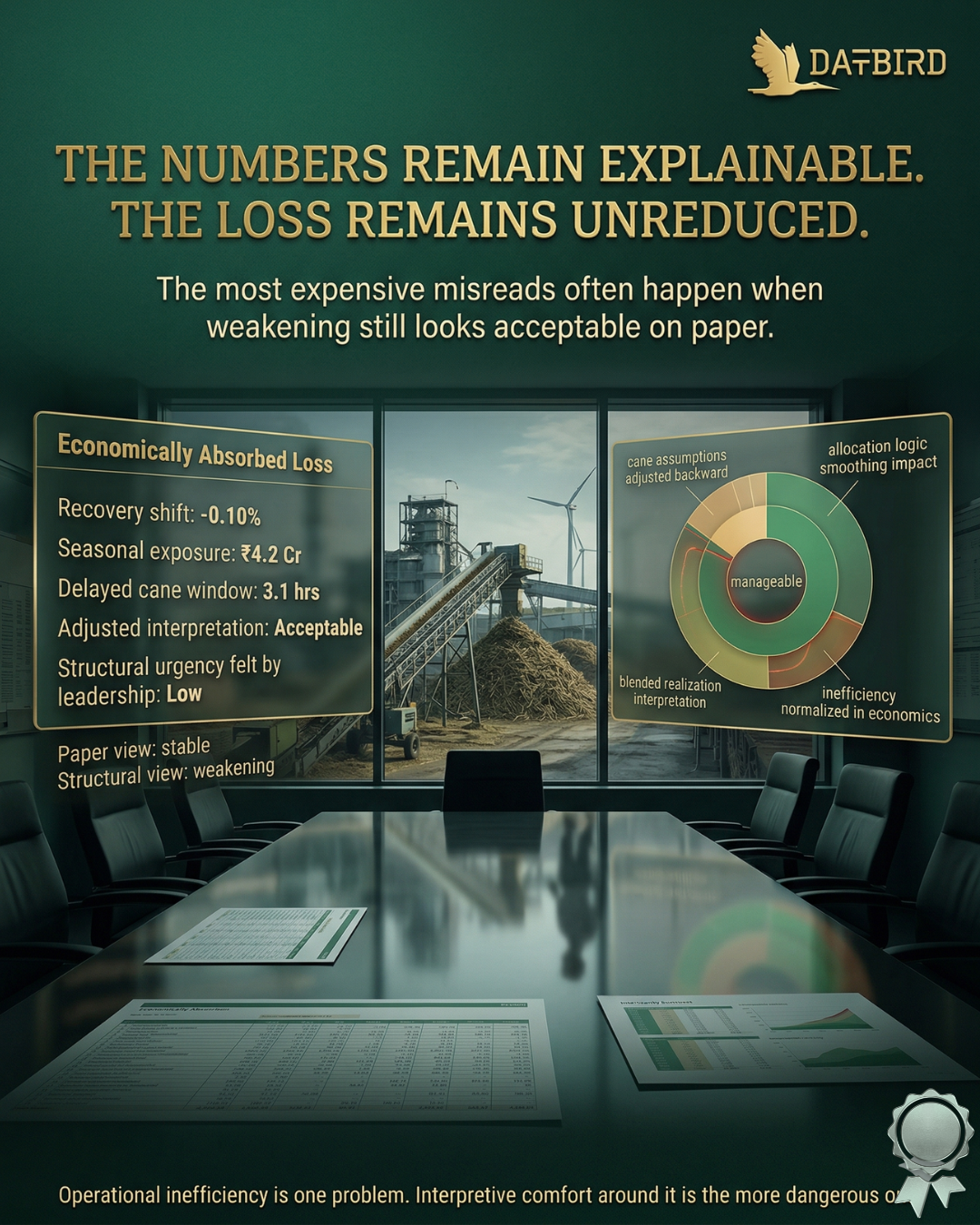
A recovery decline of just 0.1–0.15% in the closing phase may appear operationally manageable.
But across seasonal volumes, that small percentage can translate into:
• ₹3–6 crore of unrealized sugar value
• weaker molasses and co-product optimization
• compressed EBITDA in the final cycle of the season
The financial signal appears late.
The structural causes usually emerged much earlier in the crushing window.
This is rarely an execution problem first.
It is usually a measurement problem.
Most plants monitor:
• daily recovery
• seasonal averages
• production tonnage
Far fewer monitor the structural indicators that determine recovery months in advance:
• freshness window stability
• fibre drift across cane supply
• peak-window throughput alignment
• energy and steam balance efficiency
Without those signals, leadership sees the outcome — not the system drift that created it.
The more useful question is not:“Why did recovery fall at the end of the season?”
It is:“When did the structural drift that caused it actually begin?”
Because in seasonal processing industries, the most expensive losses rarely appear when they start.If you want that clarity before the next crushing season begins, that is a conversation worth having.
Our latest news and trending topics