March 21, 2026
Cane freshness does not stop mattering at the mill gate.
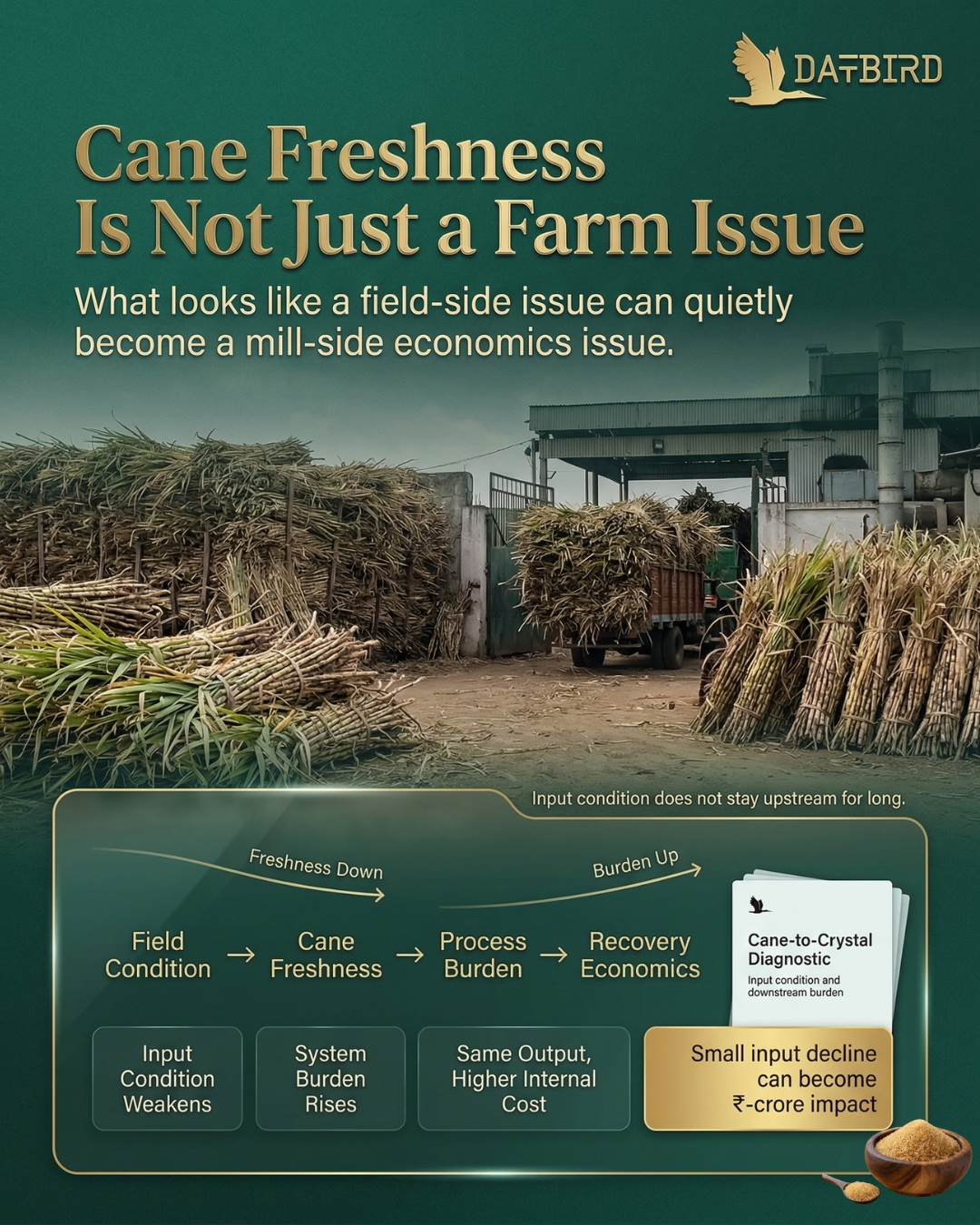
Cane freshness does not stop mattering at the mill gate. That is where the economics begin.

Cane freshness does not stop mattering at the mill gate.
That is where the economics begin.In many sugar reviews, cane freshness is still spoken about as if it belongs mainly to the field.
That is too narrow.Because once cane enters the mill in weaker condition, the issue does not stay outside operations.
The plant begins to absorb it.Not always dramatically. Often quietly.A little more instability. A little more burden to hold process conditions.
A little less room for extraction efficiency. A little more effort for the same visible result.And that is exactly why freshness is not only an agronomy issue. It is an operating economics issue.
The problem in most businesses is not that this is unknown.
It is that it is not read as one connected chain.Field teams may see cane condition.
The mill may see process strain. Finance may later see weaker contribution.
Leadership may see only the final summary.But these are not separate stories.
They are one story moving through different layers of the business.
That is why a more useful question is not only:
Was cane supplied?It is also:In what condition did it enter the mill, and what burden did the plant silently absorb because of that condition?
In high-volume businesses, small changes in input condition rarely stay small for long.
They reappear later as operating burden, efficiency pressure, and margin softness.
That is where better decision clarity begins.What gets underestimated more in sugar reviews: freshness loss itself, or the burden it creates inside the mill?
Our latest news and trending topics