March 15, 2026
A mill does not become unstable in one quarter. It becomes unstable in layers.
A mill does not become unstable in one quarter. It becomes unstable in layers.

A mill does not become unstable in one quarter.
It becomes unstable in layers.A sugar mill rarely becomes unviable all at once.
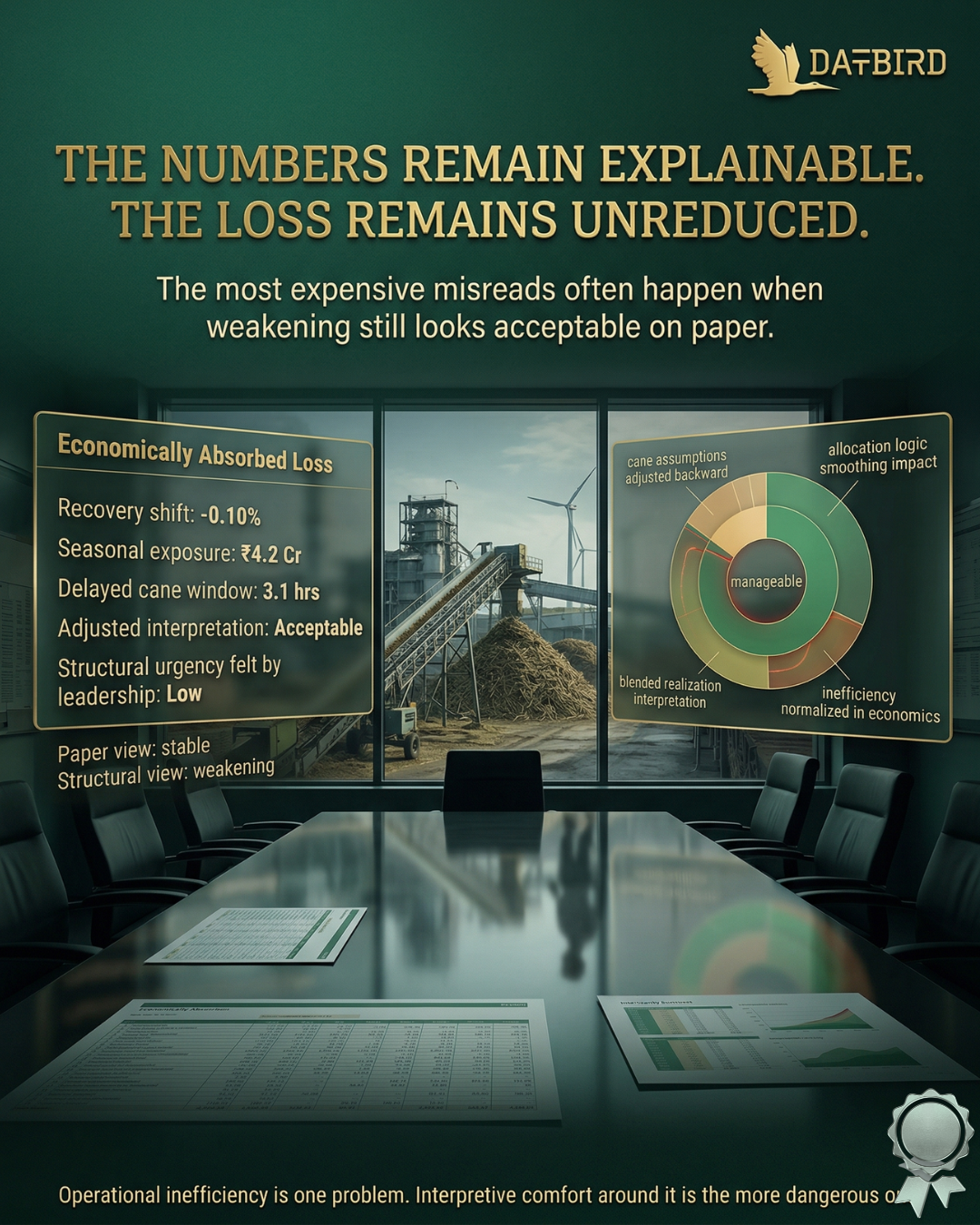
What appears later as low recovery, shorter crushing duration, rising cost per tonne, or weak contribution margins usually began much earlier — as small deviations that were operationally tolerated, but never strategically diagnosed.
That is where many leadership teams get misled.
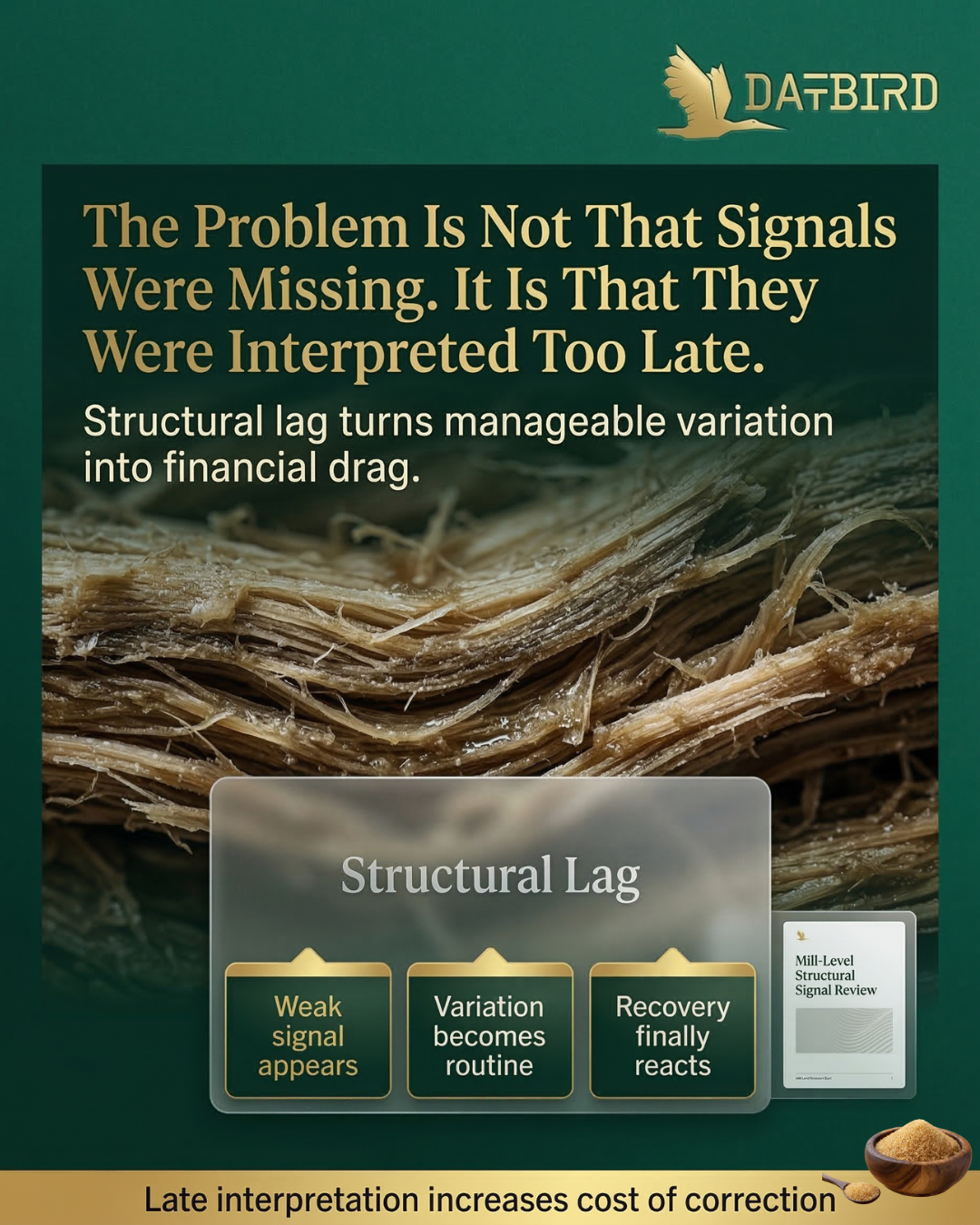
By the time financial underperformance becomes visible on paper, the system has often been drifting for months.
In most mills, instability does not originate in one dramatic breakdown.
It accumulates quietly across linked layers:cane condition and availabilitypreparation and extraction disciplineprocess-side variationsteam and energy inefficiencyby-product monetization weaknessdelayed operating response
Each layer may appear manageable in isolation.
But when these deviations compound across the season, they stop being operational noise and start becoming structural drag.
This is why two mills with similar installed capacity, comparable cane availability, and even similar headline recovery can still produce very different financial outcomes.
Because the real difference is often not in the final number.
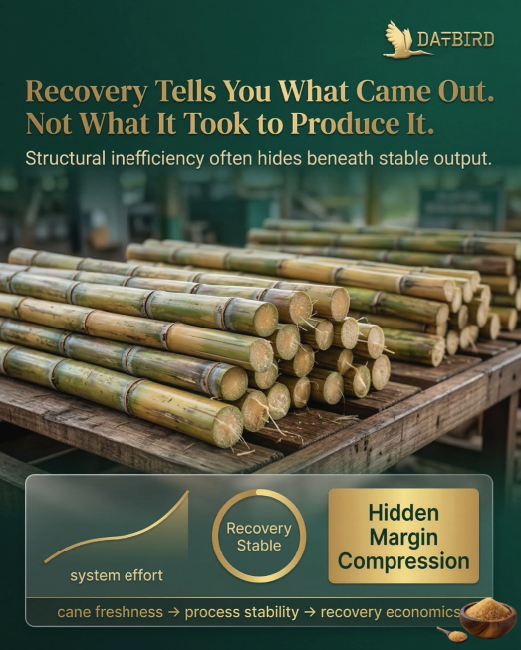
It is in how efficiently, consistently, and profitably the system produced that number.
A small drift in cane freshness, a modest drop in preparation efficiency, a recurring steam imbalance, or delayed correction in process variation may each look minor at first glance.But across a full crushing season, those “minor” deviations can compress throughput, weaken recovery quality, increase cost loading, and erode contribution in ways that only become visible when margins are already under pressure.
That is why this is not first an execution problem.It is a clarity problem.
If leadership is only reviewing end metrics, they are often looking at the consequence — not the point of origin.
The more useful question is not:When did the number drop?The more strategic question is:Where did the drift begin?
That is the level at which structural diagnosis becomes valuable — before instability gets misread as market pressure, labour inefficiency, cane shortage, or “just a bad season.”
For MDs, COOs, and CFOs, this matters because once instability becomes financially visible, the cost of correction is always higher than the cost of earlier diagnostic clarity.
If this is something you want clarity on before your next crushing season decision, let’s talk.In your experience, which layer introduces the earliest recovery drift in a plant — cane condition, extraction discipline, process control, or energy balance?
Our latest news and trending topics