March 21, 2026
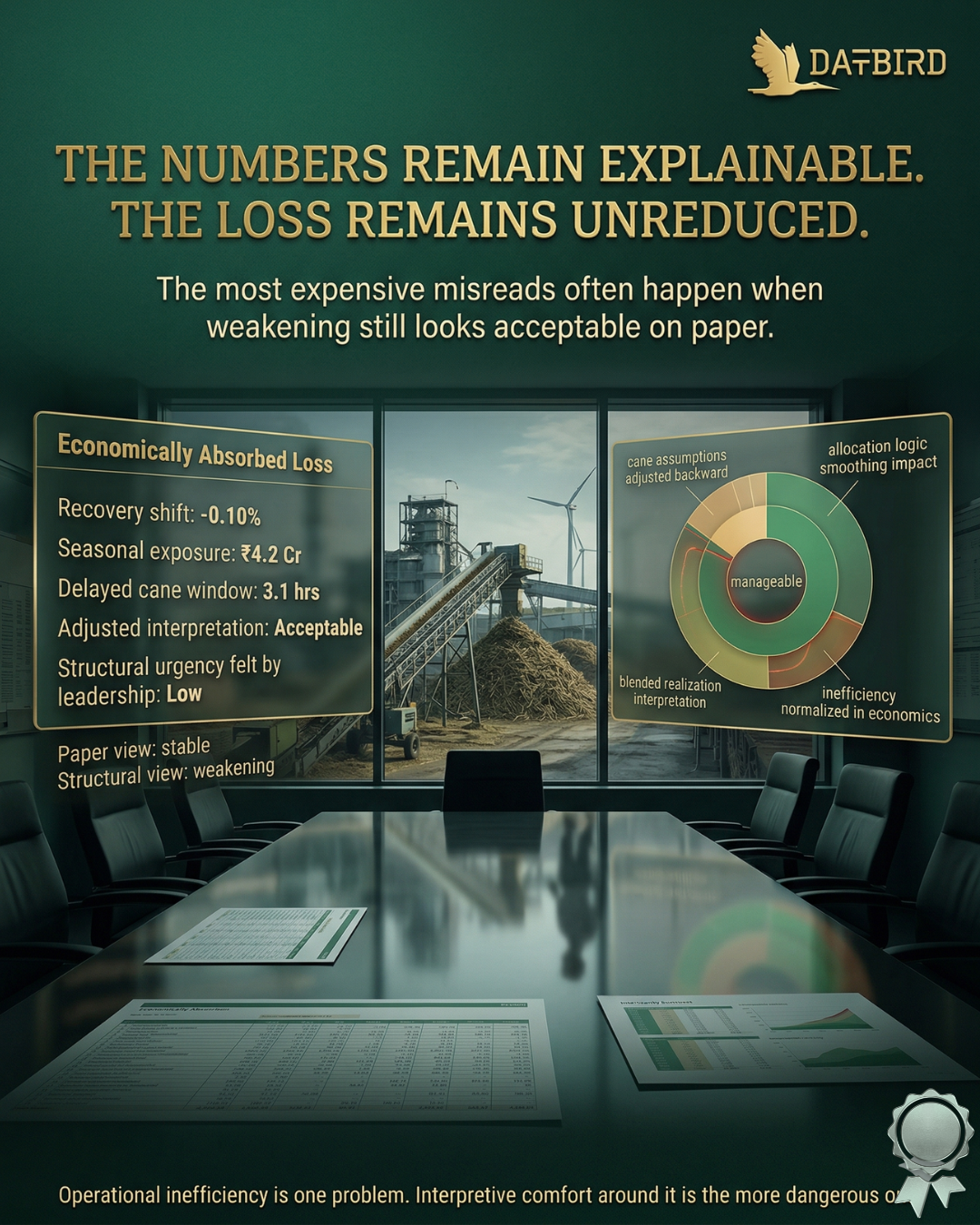
A 0.1% recovery shift rarely begins in the boiling house.
A 0.1% recovery shift rarely begins in the boiling house. But that’s where most mills start looking.


A 0.1% recovery shift rarely begins in the boiling house.
But that’s where most mills start looking.Across the industry, recovery is treated as a seasonal performance KPI.
If recovery drops by 0.1–0.2%, the instinctive response is to examine boiling house parameters, crystallisation control, or centrifuge performance.
Yet in most cases, the boiling house is simply where the system reveals a problem that began much earlier.
Recovery is not an isolated process outcome.It is the final expression of structural alignment across the entire cane-to-crystal system.
Small shifts accumulate across upstream layers:
• cane age distribution across supply zones
• harvest-to-crush delays during peak season
• fibre % volatility entering the milling tandem
• evaporation load imbalance affecting thermal stability
• energy intensity drift altering process equilibrium
Each of these factors individually appears minor.
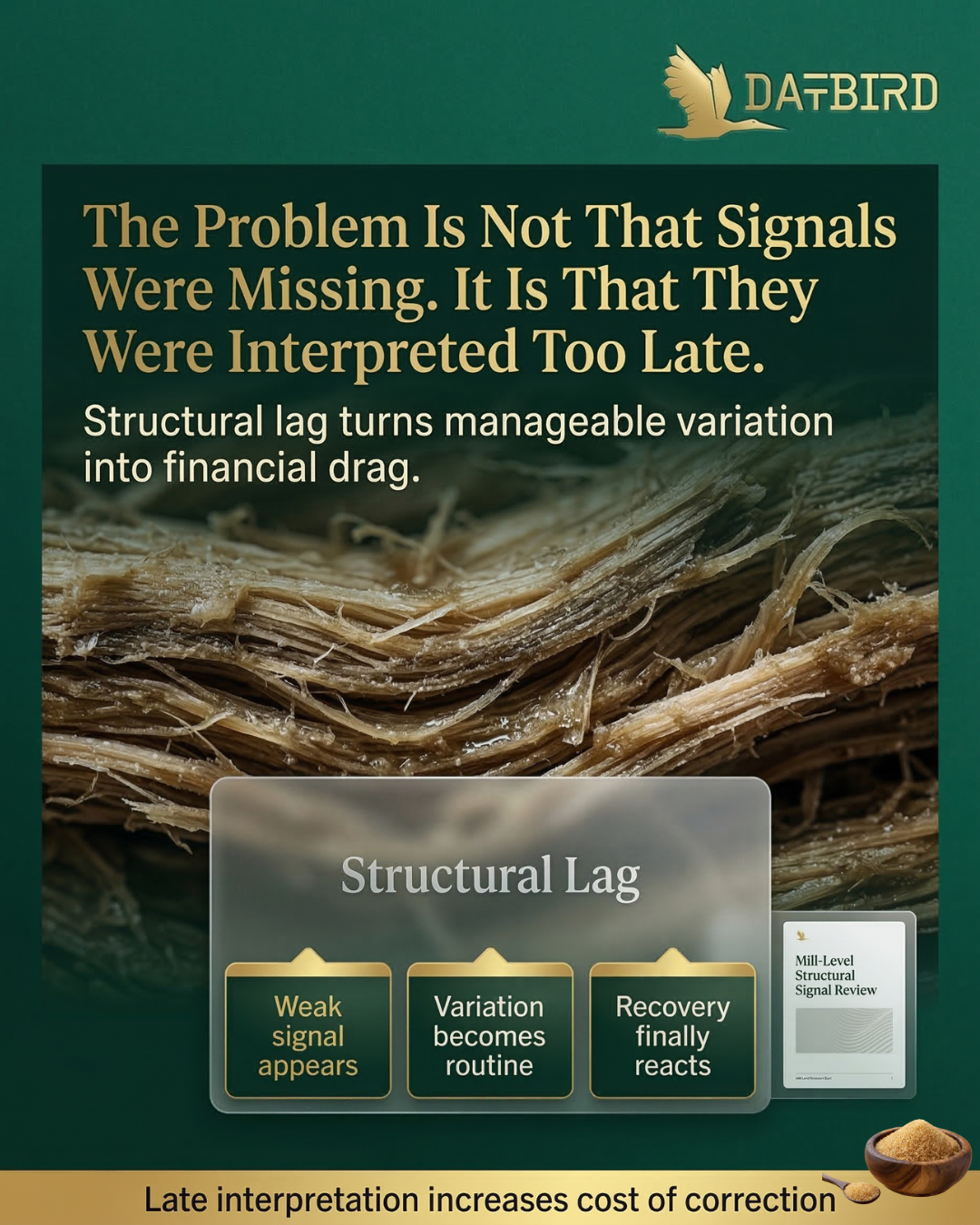
But together they shape the structural stability of the plant long before recovery numbers move.
By the time recovery visibly declines, the system has often been drifting for weeks — sometimes months.Consider a mill crushing 12–14 lakh tonnes of cane in a season.A 0.1% recovery shift may appear operationally insignificant.
Yet financially it can translate into ₹3–5 crore in value compression, depending on sugar price and operational structure.
What makes this particularly challenging is that the loss rarely appears as a single event.It accumulates gradually through small structural inefficiencies that remain invisible to traditional operational dashboards.In most mills, the question becomes “How do we fix recovery?”
But the more useful question is:“Where did the structural drift begin?”
Before execution improvements can be made, leadership teams need clarity on the structural drivers shaping recovery stability across the season.
Without that visibility, plants often attempt to correct symptoms rather than the system dynamics creating them.
Recovery decline rarely starts where it becomes visible.If you want to understand where the structural drift actually begins before the next crushing season,I’m always open to exchanging perspectives with fellow industry leaders.
Our latest news and trending topics