March 9, 2026
A 0.1% recovery gap rarely alarms anyone.
A 0.1% recovery gap rarely alarms anyone. It usually disappears inside the tolerance band of operational dashboards.

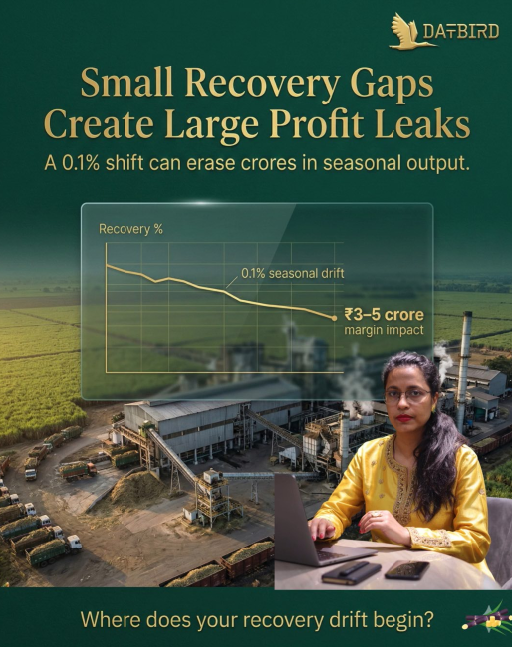
A 0.1% recovery gap rarely alarms anyone.It usually disappears inside the tolerance band of operational dashboards.
But in a large sugar mill, that decimal point is rarely small.Most plants track recovery as a performance indicator.
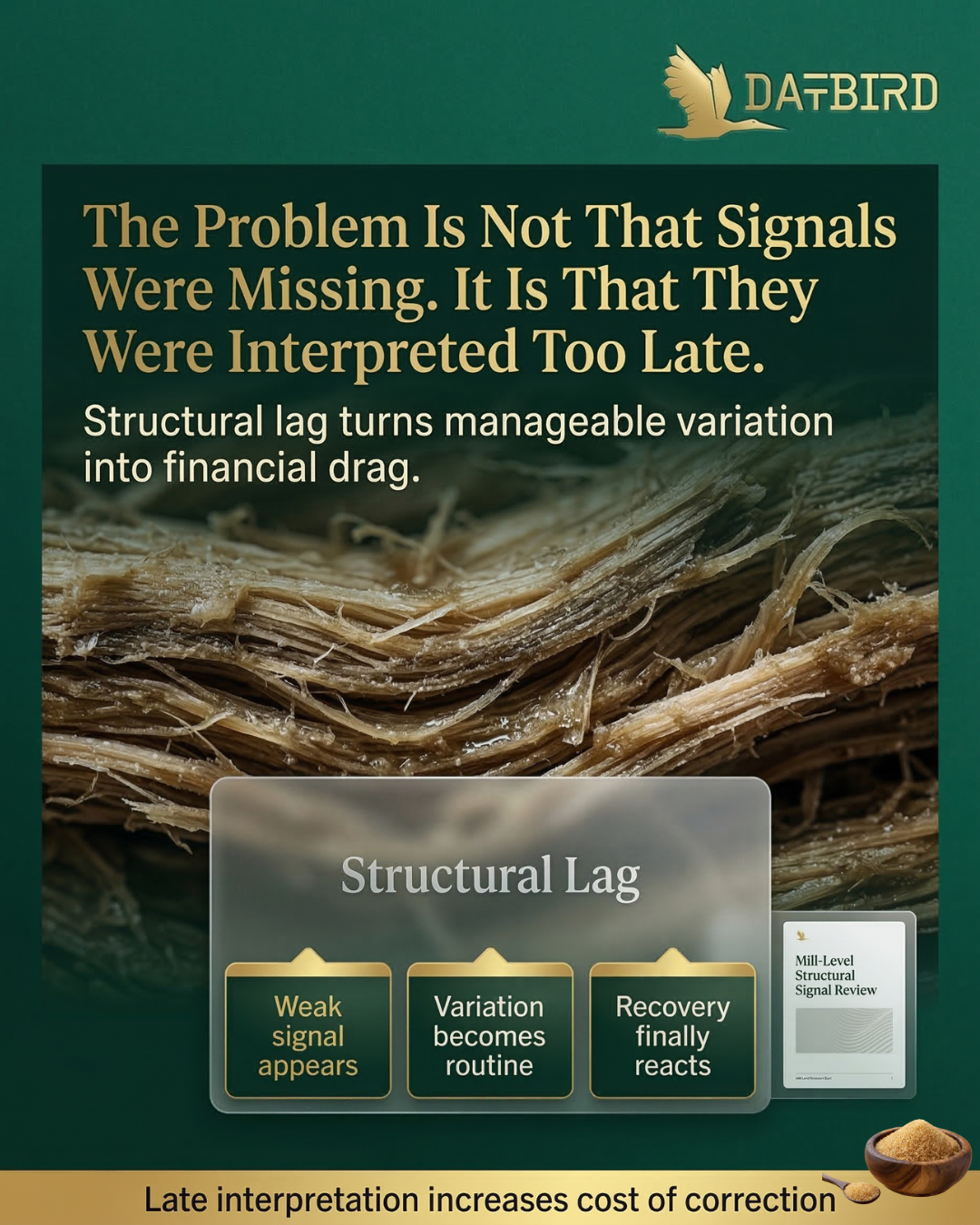
But recovery is not just an operational outcome — it is a structural signal.Small shifts in cane composition, crushing timing, fibre ratios, and mill extraction efficiency accumulate quietly through the season.
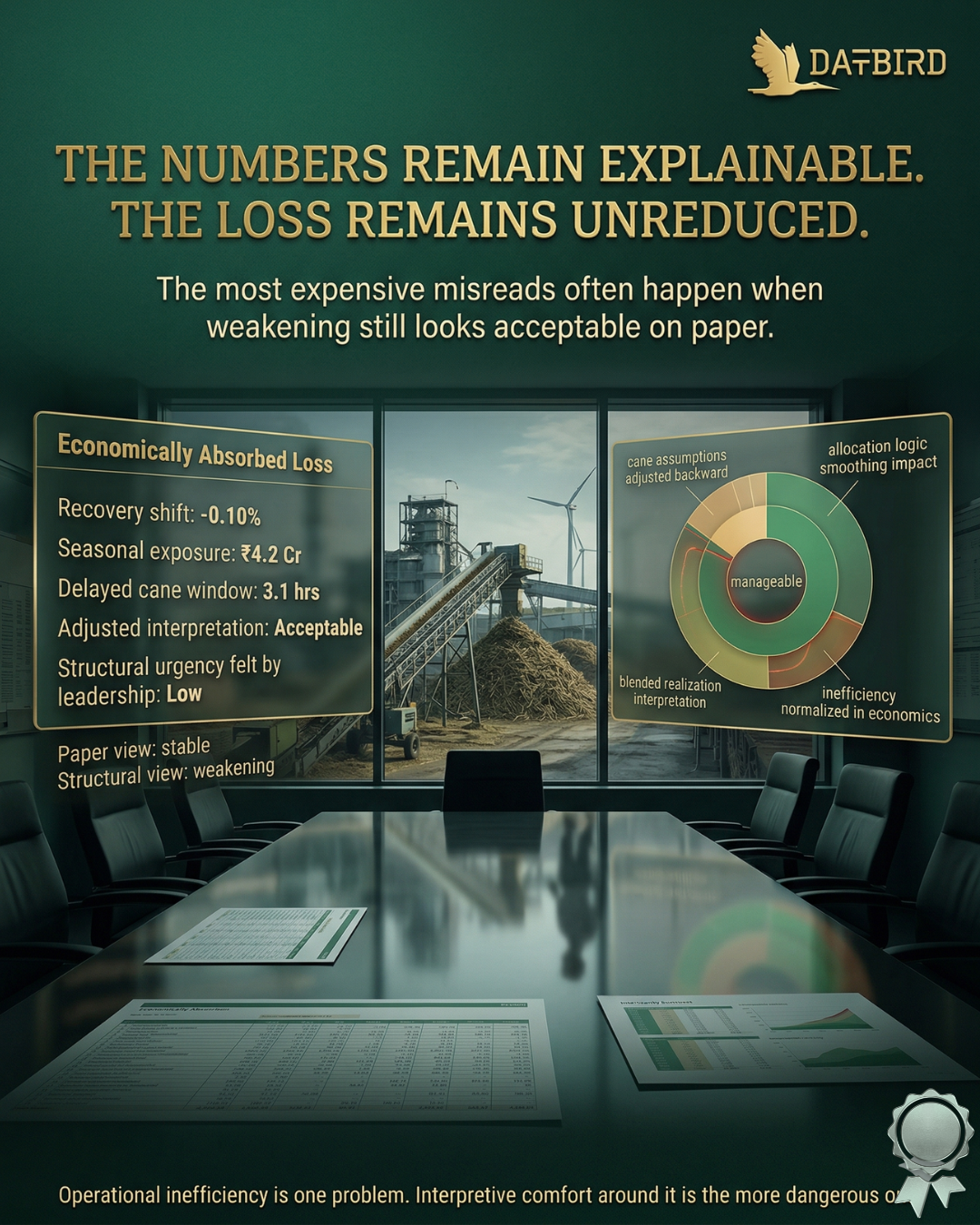
The dashboard shows stability.
The system slowly leaks value.
Consider a mill crushing 12 lakh tonnes in a season.A 0.1% recovery gap equals roughly 1,200 tonnes of sugar not realized.At prevailing realizations, that translates to ₹3–5 crore of margin erosion.
No alarm triggers.No operational crisis appears.
But the value has already drifted out of the system.
The issue is rarely execution alone.It is often structural alignment:
• cane variety mix
• ratoon proportion• fibre % drift
• crushing window timing
• mill extraction thresholdsUntil those dynamics are visible, teams optimize operations inside a system that is already drifting.
This is a clarity problem before it becomes a performance problem.Before the next crushing season review, a sharper question might be:Where exactly does our recovery drift begin?
If you want clarity on that before the next seasonal cycle, that is a conversation worth having.
Our latest news and trending topics