February 16, 2026
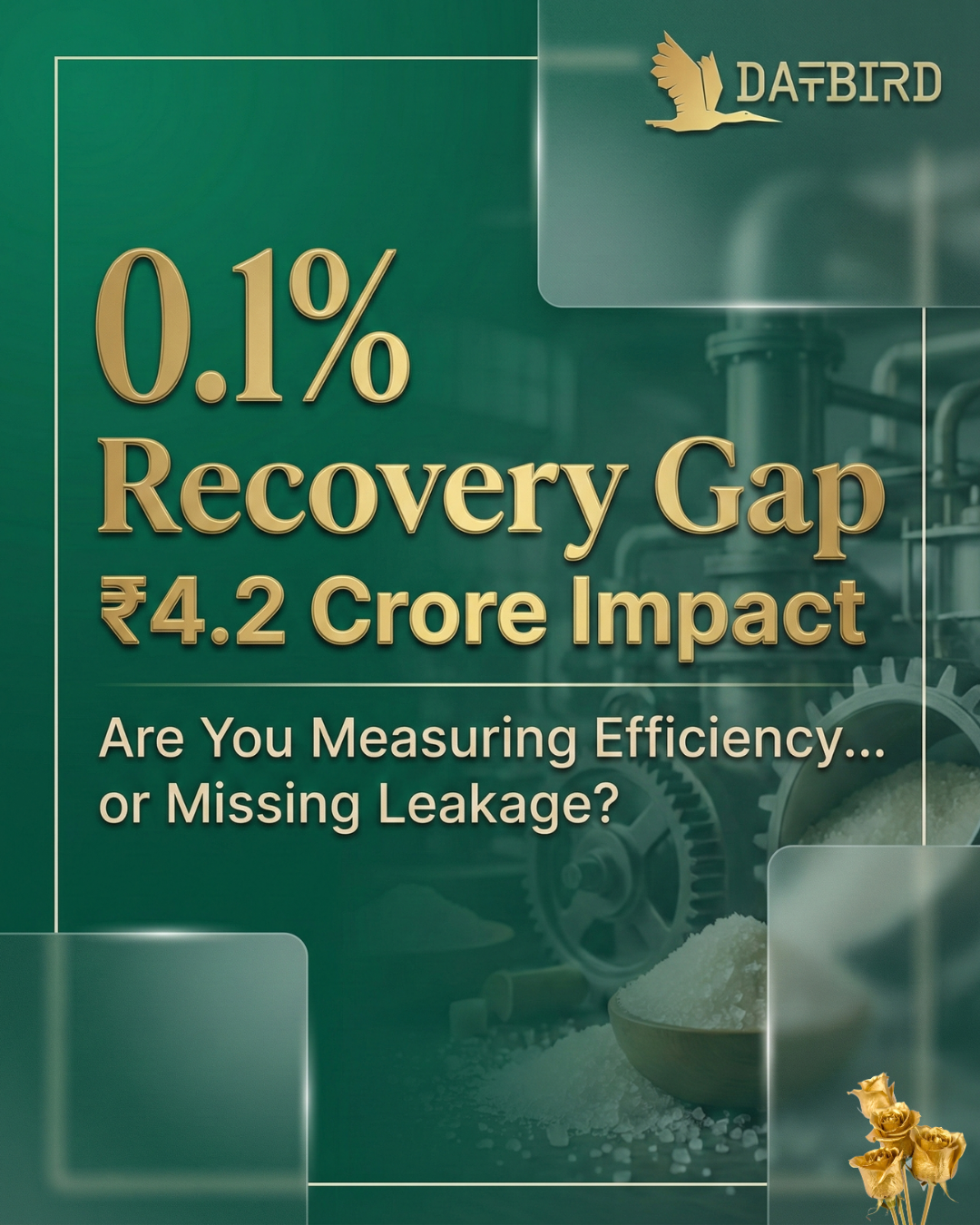
A 0.1% Recovery Gap — Is Your Mill Losing ₹3–5 Crore Per Season?
A 0.1% Recovery Gap — Is Your Mill Losing ₹3–5 Crore Per Season?

Most mills celebrate a stable recovery percentage.
But stability is not the same as optimality.
A 0.1% gap rarely triggers alarm. It should.
In the Sugar industry, recovery % is treated as an operational metric.It is not.It is a structural outcome.
Recovery is shaped by:Variety mix decisions made 12–18 months earlier
Ratoon-to-plant cane balance
Harvest timing discipline
Crushing scheduling
Process control stability
Cane freshness at entry
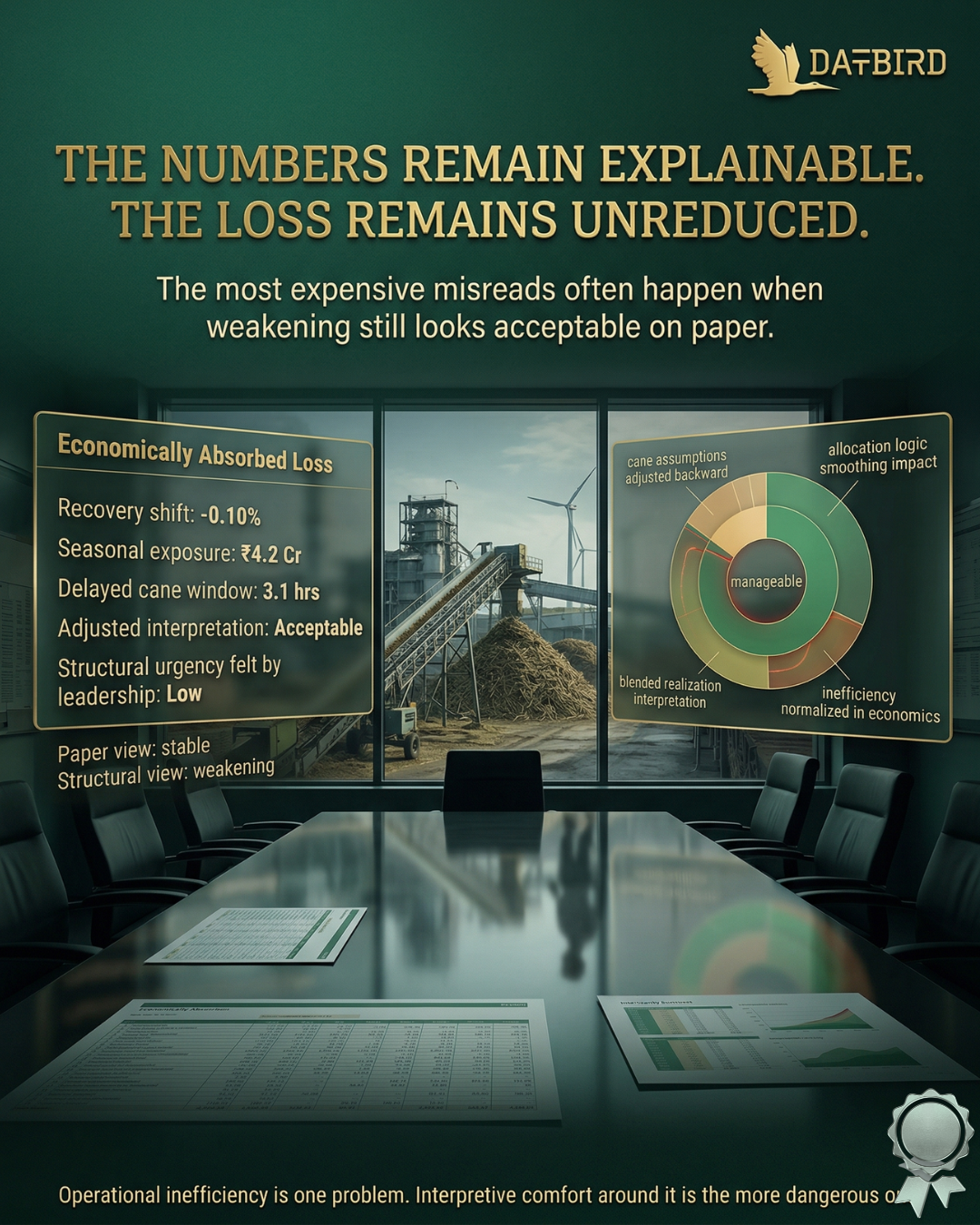
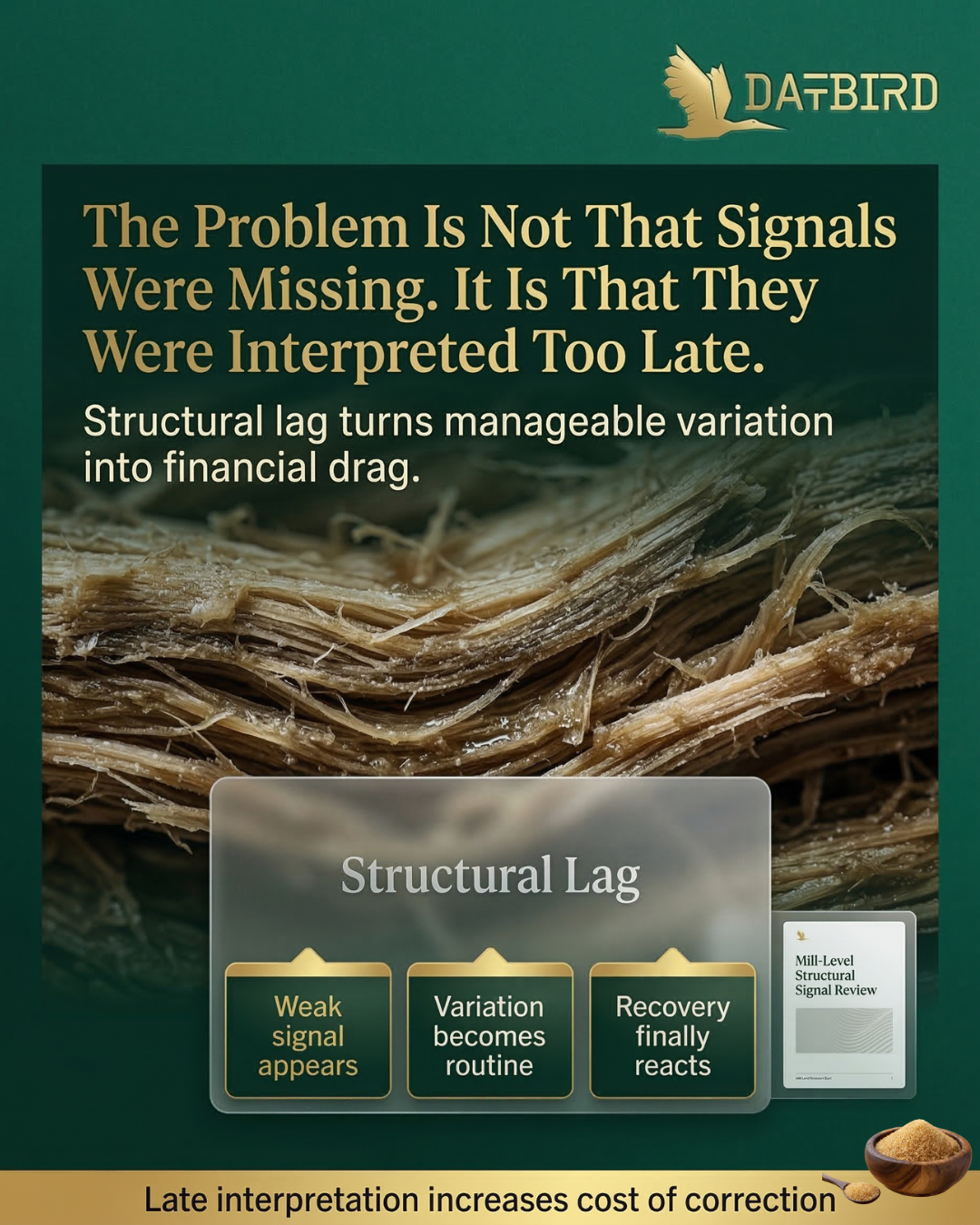
By the time recovery drops by 0.1%, the cause is already embedded in the system.
What looks like a small seasonal fluctuation is often a structural design issue.
Let’s run conservative numbers.Assume:12 lakh tonnes cane crushed in a season10% average recovery
That yields 1.2 lakh tonnes of sugar.
Now consider a 0.1% recovery suppression (10% → 9.9%).
Sugar output reduces by:12,00,000 tonnes × 0.1%= 1,200 tonnes of sugar
At ₹35,000 per tonne, that equals:₹4.2 crore revenue impact.
This is not theoretical variance.
This is direct EBITDA erosion — because fixed costs remain unchanged.
And this excludes:Power co-generation impact
Ethanol diversion adjustments
Working capital compounding0.1% is not a decimal.
It is a multi-crore structural signal.
Most mills respond to recovery gaps with:
Process audits
Technical recalibration
Seasonal blame
Very few step back and ask:
Is our recovery profile structurally designed to underperform?
Before you invest in modernization…
Before you push plant teams harder…Before you expand capacity…
The real question is:
Do you have clarity on where your 0.1% is leaking from?
This is not an execution problem.
It is a structural intelligence problem
.If you want this level of quantified clarity before your next crushing season decision, let’s have a conversation.
Because sometimes the difference between average and exceptional performance is just 0.1%.
Our latest news and trending topics